THE NARRATOR’S NARRATIVE
by Unknown
Adapted Version
Hello, little friend. Let me tell you a story. It is my story. It is about my family.
My name is Grandma. I am old now. But I know many things. My Great-Grandpa was a brave man. He loved God very much. His whole family loved God too. Some people were angry about that. But Great-Grandpa was strong. He joined the army. He was a good soldier. He fought in many battles. He won five shiny medals. We were so proud of him.
Great-Grandma was very strong too. She walked with Great-Grandpa. She went where he went. She saw many far places. She heard many big things. She met many big people. Great-Grandma told us stories. She told us about brave men. She told us about big battles. We children loved her stories. We sat and listened for hours.
My father worked hard too. He helped the army. He carried many heavy things. One day there was a big mess. Water was all over. Things were floating in the river. My father found some things. He found some boxes too. He took them to his camp. But a guard took them away. Poor father lost his things. But he did not give up.
When I was small, things were cheap. A little money bought a lot. We could buy much food. Rice was very cheap then. Sugar was very cheap too. A small house cost very little. We were poor but happy. We had enough to eat. We had a good home. Now all costs more money. Life is very not same now. But we had plenty comfort then.
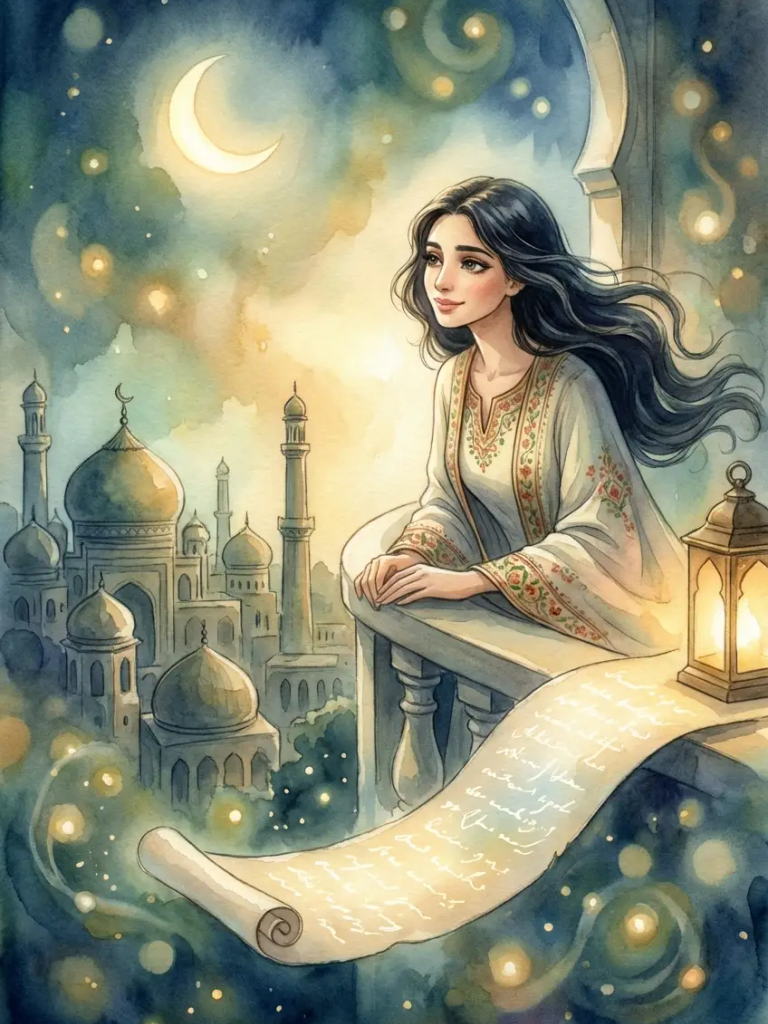
There were no schools then. Children did not read books. Children did not write words. But Great-Grandma was very wise. She knew many, many stories. She called us inside the house. "Come in from the sun," she said. "I will tell you a story." We sat on the floor. She told long, good stories. We loved each single one. That was our school.
Great-Grandma loved God very much. She also knew about the stars. She told us about the sky. She showed us bright star groups. She knew their names and stories. She taught us good things. She said, "Be kind always." She said, "Love all." She knew good spirits. The sky was her big book. We learned so much from her.
I was a young woman once. I met a kind man. He became my husband. We were happy together. But then he got very sick. He went to heaven. I was very, very sad. I cried many tears. I missed him so much. But I had two children. I had to be strong. I had to take care of them.
I worked very, very hard. I had two small children. I cleaned big houses. I washed many clothes. I learned to speak English. A kind lady helped me. She taught me many things. She was
Original Story
THE NARRATOR’S NARRATIVE.
MY grandfather’s family were of the Lingaet caste, and lived in Calicut; but they went and settled near Goa at the time the English were there. It was there my grandfather became a Christian. He and his wife, and all the family, became Christians at once, and when his father heard it he was very angry, and turned them all out of the house. There were very few Christians in those days. Now you see Christians everywhere, but then we were very proud to see one anywhere. My grandfather was Havildar[\[3\]](#Footnote_3_3) in the English army, and when the English fought against Tippo Sahib, my grandmother followed him all through the war. She was a very tall, fine, handsome woman, and very strong; wherever the regiment marched she went, on, on, on, on (great deal hard work that old woman done). Plenty stories my granny used to tell about Tippo and how Tippo was killed, and about Wellesley Sahib, and Monro Sahib, and Malcolm Sahib, and Elphinstone Sahib.[\[4\]](#Footnote_4_4) Plenty things had that old woman heard and seen. Ah, he was a good man, Elphinstone Sahib! My granny used often to tell us how he would go down and say to the soldiers, “Baba,[\[5\]](#Footnote_5_5) Baba, fight well. Win the battles, and each man shall have his cap full of money; and after the war is over I’ll send every one of you to his own home.” (And he did do it.) Then we children plenty proud, when we heard what Elphinstone Sahib had said. In those days the soldiers were not low-caste people like they are now. Many, very high-caste 16\] men, and come from very far, from Goa, and Calicut, and Malabar to join the English.
My father was a tent lascar,[\[6\]](#Footnote_6_6) and when the war was over my grandfather had won five medals for all the good he had done, and my father had three; and my father was given charge of the Kirkee stores.[\[7\]](#Footnote_7_7) My grandmother and mother, and all the family, were in those woods behind Poona at time of the battle at Kirkee.[\[8\]](#Footnote_8_8) I’ve often heard my father say how full the river was after the battle—baggage and bundles floating down, and men trying to swim across—and horses and all such a bustle. Many people got good things on that day. My father got a large chattee,[\[9\]](#Footnote_9_9) and two good ponies that were in the river, and he took them home to camp; but when he got there the guard took them away. So all his trouble did him no good.
We were poor people, but living was cheap, and we had plenty comfort.
In those days house rent did not cost more than half a rupee[\[10\]](#Footnote_10_10) a month, and you could build a very comfortable house for a hundred rupees. Not such good houses as people now live in, but well enough for people like us. Then a whole family could live as comfortably on six or seven rupees a month as they can now on thirty. Grain, now a rupee a pound, was then two annas a pound. Common sugar, then one anna a pound, is now worth four annas a pound. Oil which then sold for six pice a bottle, now costs four annas. Four annas’ worth of salt, chillies, tamarinds, onions and garlic, would then last a family a whole month; now the same money would not buy a week’s supply. Such dungeree[\[11\]](#Footnote_11_11) as you now pay half rupee a yard for, you could then buy from twenty to forty yards of, for the rupee. You could not get such good calico then as now, 17\] but the dungeree did very well. Beef then was a pice a pound, and the vegetables cost a pie a day. For half a rupee you could fill the house with wood. Water also was much cheaper. You could then get a man to bring you two large skins full, morning and evening, for a pie; now he would not do it under half a rupee or more. If the children came crying for fruit, a pie would get them as many guavas as they liked in the bazaar. Now you’d have to pay that for each guava. This shows how much more money people need now than they did then.[\[12\]](#Footnote_12_12)
The English fixed the rupee to the value of sixteen annas, in those days there were some big annas, and some little ones, and you could sometimes get twenty-two annas for a rupee.
I had seven brothers and one sister. Things were very different in those days to what they are now. There were no schools then to send the children to; it was only the great people who could read and write. If a man was known to be able to write he was plenty proud, and hundreds and hundreds of people would come to him to write their letters. Now you find a pen and ink in every house! I don’t know what good all this reading and writing does. My grandfather couldn’t write, and my father couldn’t write, and they did very well; but all’s changed now.
My father used to be out all day at his work, and my mother often went to do coolie-work,[\[13\]](#Footnote_13_13) and she had to take my father his dinner (my mother did plenty work in the world); and when my granny was strong enough she used sometimes to go into the bazaar, if we wanted money, and grind rice for the shop-keepers, and they gave her half a rupee for her day’s work, and used to let her have the bran and chaff besides. But afterward she got too old to do that, and besides there were so many of us children. So she used to stay at home and look after us while my mother was at work. Plenty bother ’tis to look after a lot of children. No sooner my granny’s back turned than we all run out in the sun, and play with the dust and stones on the road.
Then my granny would call out to us, “Come here, children, out of the sun, and I’ll tell you a story. Come in; 18\] you’ll all get headaches.” So she used to get us together (there were nine of us, and great little fidgets, like all children), into the house; and there she’d sit on the floor, and tell us one of the stories I tell you. But then she used to make them last much longer, the different people telling their own stories from the beginning as often as possible; so that by the time she’d got to the end, she had told the beginning over five or six times. And so she went on, talk, talk, talk, Mera Bap reh![\[14\]](#Footnote_14_14) Such a long time she’d go on for, till all the children got quite tired and fell asleep. Now there are plenty schools to which to send the children, but there were no schools when I was a young girl; and the old women, who could do nothing else, used to tell them stories to keep them out of mischief.
We used sometimes to ask my grandmother, “Are those stories you tell us really true? Were there ever such people in the world?” She generally answered, “I don’t know, but maybe there are somewhere.” I don’t believe there are any of those people living; I dare say, however, they did once live; but my granny believed more in those things than we do now. She was a Christian, she worshiped God and believed in our Saviour, but still she would always respect the Hindoo temples. If she saw a red stone, or an image of Gunputti[\[15\]](#Footnote_15_15) or any of the other Hindoo gods, she would kneel down and say her prayers there, for she used to say, “Maybe there’s something in it.”
About all things she would tell us pretty stories—about men, and animals, and trees, and flowers, and stars. There was nothing she did not know some tale about. On the bright cold-weather nights, when you can see more stars than at any other time of the year, we used to like to watch the sky, and she would show us the Hen and Chickens,[\[16\]](#Footnote_16_16) and the Key,[\[17\]](#Footnote_17_17) and the Scorpion, and the Snake, and the Three Thieves climbing up to rob the Ranee’s silver bedstead, with their mother (that twinkling star far away) watching for her sons’ return. Pit-a-pat, pit-a-pat, you can see how her heart beats, for she is always frightened, thinking, “Perhaps they will be caught and hanged!”
19\] Then she would show us the Cross,[\[18\]](#Footnote_18_18) that reminds us of our Saviour’s, and the great pathway of light[\[19\]](#Footnote_19_19) on which He went up to heaven. It is what you call the Milky Way. My granny usen’t to call it that: she used to say that when our Lord returned up to heaven that was the way He went, and that ever since it has shone in memory of His ascension, so beautiful and bright.
She always said a star with a smoky tail (comet) meant war, and she never saw a falling star without saying, “There’s a great man died;” but the fixed stars she used to think were all really good people, burning like bright lamps before God.
As to the moon, my granny used to say she’s most useful to debtors who can’t pay their debts. Thus: A man who borrows money he knows he cannot pay, takes the full moon for witness and surety. Then, if any man so silly as to lend him money and go and ask him for it, he can say, “The moon’s my surety; go catch hold of the moon!” Now, you see, no man can do that; and what’s more, when the moon’s once full, it grows every night less and less, and at last goes out altogether.
All the Cobras in my grandmother’s stories were seven-headed. This puzzled us children, and we would say to her, “Granny, are there any seven-headed Cobras now? For all the Cobras we see that the conjurors bring round have only one head each.” To which she used to answer, “No, of course there are no seven-headed Cobras now. That world is gone, but you see each Cobra has a hood of skin; that is the remains of another head.” Then we would say, “Although none of those old seven-headed Cobras are alive now, maybe there are some of their children living somewhere.” But at this my granny used to get vexed, and say, “Nonsense! you are silly little chatter-boxes; get along with you!” And, though we often looked for the seven-headed Cobras, we never could find any of them.
My old granny lived till she was nearly a hundred; when she got very old she rather lost her memory, and often made mistakes in the stories she told us, telling a bit of one story 20\] and then joining on to it a bit of some other; for we children bothered her too much about them, and sometimes she used to get very tired of talking, and when we asked her for a story, would answer, “You must ask your mother about it; she can tell you.”
Ah! those were happy days, and we had plenty ways to amuse ourselves. I was very fond of pets; I had a little dog that followed me everywhere, and played all sorts of pretty tricks, and I and my youngest brother used to take the little sparrows out of their nests on the roof of our house and tame them. These little birds got so fond of me they would always fly after me; as I was sweeping the floor one would perch on my head, and two or three on my shoulders, and the rest come fluttering after. But my poor father and mother used to shake their heads at me when they saw this, and say, “Ah, naughty girl, to take the little birds out of their nests: that stealing will bring you no good.” All my family were very fond of music. You know that Rosie (my daughter) sings very nicely and plays upon the guitar, and my son-in-law plays on the pianoforte and the fiddle (we’ve got two fiddles in our house now), but Mera Bap reh! how well my grandfather sang! Sometimes of an evening he would drink a little toddy,[\[20\]](#Footnote_20_20) and be quite cheerful, and sing away; and all we children liked to hear him. I was very fond of singing. I had a good voice when I was young, and my father used to be so fond of making me sing, and I often sang to him that Calicut song about the ships sailing on the sea[\[21\]](#Footnote_21_21) and the little wife watching for her husband to come back, and plenty more that I forget now; and my father and brothers would be so pleased at my singing, and laugh and say, “That girl can do anything.” But now my voice is gone, and I didn’t care to sing any more since my son died, and my heart been so sad.
In those days there were much fewer houses in Poona than there are now, and many more wandering gipsies, and such like. They were very troublesome, doing nothing but begging and stealing, but people gave them all they wanted, as it was believed that to incur their ill-will was very dangerous. It 21\] was not safe even to speak harshly of them. I remember one day, when I was quite a little girl, running along by my mother’s side, when she was on her way to the bazaar: we happened to pass the huts of some of these people, and I said to her “See, mother, what nasty, dirty people those are; they live in such ugly little houses, and they look as if they never combed their hair nor washed.” When I said this, my mother turned round quite sharply and boxed my ears, saying, “Because God has given you a comfortable home and good parents, is that any reason for you to laugh at others who are poorer and less happy?” “I meant no harm,” I said; and when we got home I told my father what my mother had done, and he said to her, “Why did you slap the child?” She answered, “If you want to know, ask your daughter why I punished her. You will then be able to judge whether I was right or not.” So I told my father what I had said about the gipsies, and when I told him, instead of pitying me, he also boxed my ears very hard. So that was all I got for telling tales against my mother!
But they both did it, fearing if I spoke evil of the gipsies and were not instantly punished, some dreadful evil would befall me.
It was after my granny that I was named “Anna Liberata.” She died after my father, and when I was eleven years old. Her eyes were quite bright, her hair black, and her teeth good to the last. If I’d been older then, I should have been able to remember more of her stories. Such a number as she used to tell! I’m afraid my sister would not be able to remember any of them. She has had much trouble; that puts those sort of things out of people’s heads; besides, she is a goose. She is younger than I am, although you would think her so much older, for her hair turned gray when she was very young, while mine is quite black still. She is almost bald too, now, as she pulled out her hair because it was gray. I always said to her, “Don’t do so; for you can’t make yourself any younger, and it is better, when you are getting old, to look old. Then people will do whatever you ask them! But however old you may be, if you look young, they’ll say to you, ‘You are young enough and strong enough to do your own work yourself.’”
22\] My mother used to tell us stories too; but not so many as my granny. A few years ago there might be found several old people who knew those sorts of stories; but now children go to school, and nobody thinks of remembering or telling them—they’ll soon be all forgotten. It is true there are books with some stories something like these, but they always put them down wrong. Sometimes when I cannot remember a bit of a story, I ask some one about it; then they say, “There is a story of that name in my book. I don’t know it, but I’ll read.” Then they read it to me, but it is all wrong, so that I get quite cross, and make them shut up the book. For in the books they cut the stories quite short, and leave out the prettiest part, and they jumble up the beginning of one story with the end of another—so that it is altogether wrong.
When I was young, old people used to be very fond of telling these stories; but instead of that, it seems to me that now the old people are fond of nothing but making money.
Then I was married. I was twelve years old then. Our native people have a very happy life till we marry. The girls live with their father and mother and brothers and sisters, and have got nothing to do but amuse themselves, and got father and mother to take care of them; but after they’re married they go to live at their husband’s house, and the husband’s mother and sisters are often very unkind to them.
You English people can’t understand that sort of thing. When an Englishman marries, he goes to a new house, and his wife is the mistress of it; but our native people are very different. If the father is dead, the mother and unmarried sisters live in the son’s house, and rule it; his wife is nothing in the house. And the mother and sisters say to the son’s wife, “This is not your house—you’ve not always lived in it; you cannot be mistress here.” And if the wife complains to her husband, and he speaks about it, they say, “Very well, if you are such an unnatural son, you’d better turn your mother and sisters out of doors; but while we live here, we’ll rule the house.” So there is always plenty fighting. It’s not unkind of the mother and sisters—it’s custom.
My husband was a servant in Government House—that was when Lord Clare was governor here. When I was twenty 23\] years old, my husband died of a bad fever, and left me with two children—the boy and the girl, Rosie.
I had no money to keep them with, so I said, “I’ll go to service,” and my mother-in-law said, “How can you go with two children, and so young, and knowing nothing?” But I said, “I can learn, and I’ll go;” and a kind lady took me into her service. When I went to my first place, I hardly knew a word of English (though I knew our Calicut language, and Portuguese, and Hindostani, and Mahratti well enough), and I could not hold a needle. I was so stupid, like a Coolie-woman;[\[22\]](#Footnote_22_22) but my mistress was very kind to me, and I soon learnt; she did not mind the trouble of teaching me. I often think, “Where find such good Christian people in these days?” To take a poor, stupid woman and her two children into the house—for I had them both with me, Rosie and the boy. I was a sharp girl in those days; I did my mistress’ work and I looked after the children too. I never left them to any one else. If she wanted me for a long time, I used to bring the children into the room and set them down on the floor, so as to have them under my own eye whilst I did her work. My mistress was very fond of Rosie, and used to teach her to work and read. After some time my mistress went home, and since then I have been in eight places.
My brother-in-law was valet at that time to Napier Sahib, up in Sind. All the people and servants were very fond of that Sahib. My brother-in-law was with him for ten years; and he wanted me to go up there to get place as ayah, and said, “You quick, sharp girl, and know English very well; you easily get good place and make plenty money.” But I such a foolish woman I would not go. I write and tell him, “No, I can’t come, for Sind such a long way off, and I cannot leave the children.” I plenty proud then. I give up all for the children. But now what good? I know your language. What use? To blow the fire? I only a miserable woman, fit to go to cook-room and cook the dinner. So go down in the world, a poor woman (not much good to have plenty in head and empty pocket!) but if I’d been a man I might now be a Fouzdar.[\[23\]](#Footnote_23_23)
24\] I was at Kolapore[\[24\]](#Footnote_24_24) at the time of the mutiny, and we had to run away in the middle of the night; but I’ve told you before all about that. Then seven years ago my mother died (she was ninety when she died), and we came back to live at Poona, and my daughter was married, and I was so happy and pleased.
I gave a feast then to three hundred people, and we had music and dancing, and my son, he so proud he dancing from morning to night, and running here and there arranging everything; and on that day I said, “Throw the doors open, and any beggar, any poor person come here, give them what they like to eat, for whoever comes shall have enough, since there’s no more work for me in the world.” So, thinking I should be able to leave service, and give up work, I spent all the money I had left. That was not very much, for in sending my son to school I’d spent a great deal. He was such a beauty boy—tall, straight, handsome—and so clever. They used to say he looked more like my brother than my son, and he said to me, “Mammy, you’ve worked for us all your life; now I’m grown up, I’ll get a clerk’s place and work for you. You shall work no more, but live in my house.” But last year he was drowned in the river. That was my great sad. Since then I couldn’t lift up my head. I can’t remember things now as I used to do, and all is muddled in my head, six and seven. It makes me sad sometimes to hear you laughing and talking so happy with your father and mother and all your family, when I think of my father, and mother, and brothers, and husband, and son, all dead and gone! No more happy home like that for me. What should I care to live for? I would come to England with you, for I know you would be good to me and bury me when I die, but I cannot go so far from Rosie. My one eye put out, my other eye left. I could not lose it too. If it were not for Rosie and her children I should like to travel about and see the world. There are four places I have always wished to see—Calcutta, Madras, England and Jerusalem (my poor mother always wished to see Jerusalem, too—that her great hope); but I shall not see them now. Many ladies wanted to take me to England with them, and if I had gone I should have saved plenty money, but now it is too late to think of 25\] that. Besides, it would not be much use. What’s the good of my saving money? Can I take it away with me when I die? My father and grandfather did not do so, and they had enough to live on till they died. I have enough for what I want, and I’ve plenty poor relations. They all come to me, asking for money, and I give it them. I thank our Saviour there are enough good Christians here to give me a slice of bread and cup of water when I can’t work for it. I do not fear to come to want.
Government House, Parell, Bombay, 1866.
FOOTNOTES:
[\[3\]](#FNanchor_3_3) Sergeant of native troops.
[\[4\]](#FNanchor_4_4) The Duke of Wellington, Sir Thomas Monro, Sir John Malcolm and Mr. Mountstuart Elphinstone.
[\[5\]](#FNanchor_5_5) My children.
[\[6\]](#FNanchor_6_6) Tent-pitcher.
[\[7\]](#FNanchor_7_7) The Field Arsenal at Kirkee (near Poona).
[\[8\]](#FNanchor_8_8) The battle which decided the fate of the Deccan, and led to the downfall of Bajee Row Peishwa, and extinction of Mahratta rule. Fought 13th November, 1817. See [Note A](#notea).
[\[9\]](#FNanchor_9_9) A Jar.
[\[10\]](#FNanchor_10_10) The following shows the Narrator’s calculation of currency:
1 Pie = ¼ of a cent. 3 Pie = 1 Pice. 4 Pice = 1 Anna. 16 Annas = 1 Rupee = about 50 cents.
[\[11\]](#FNanchor_11_11) A coarse cotton cloth.
[\[12\]](#FNanchor_12_12) See [Note B](#noteb).
[\[13\]](#FNanchor_13_13) Such work as is done by the Coolie caste, chiefly fetching and carrying heavy loads.
[\[14\]](#FNanchor_14_14) Oh, my Father!
[\[15\]](#FNanchor_15_15) The Hindoo God of Wisdom.
[\[16\]](#FNanchor_16_16) The Pleiades.
[\[17\]](#FNanchor_17_17) The Great Bear.
[\[18\]](#FNanchor_18_18) The Southern Cross.
[\[19\]](#FNanchor_19_19) The Milky Way. This is an ancient Christian legend.
[\[20\]](#FNanchor_20_20) An intoxicating drink made from the juice of the palm tree.
[\[21\]](#FNanchor_21_21) See [Note C](#notec).
[\[22\]](#FNanchor_22_22) A low caste—hewers of wood and drawers of water.
[\[23\]](#FNanchor_23_23) Chief Constable.
[\[24\]](#FNanchor_24_24) Capital of the Kolapore State, in the Southern Mahratta country.
27\]
Old Deccan Days.
Characters

The Narrator ★ protagonist
A woman of advanced age, likely with the physical toll of a life of hard labor and sorrow. Her build is probably slight or stooped due to age and hardship, but she carries the resilience of her past experiences. Her skin tone would be consistent with a native of the Indian subcontinent, weathered by sun and time.
Attire: Simple, practical Indian clothing suitable for a working-class woman in the mid-19th century. Likely a coarse cotton saree (dungaree fabric mentioned in the text) in muted, earthy tones, possibly worn and mended, reflecting her poverty despite her past pride.
Wants: Initially, to provide for her children and family. Later in life, to care for her remaining family (Rosie and her children) and to share her life's narrative and wisdom.
Flaw: Her deep emotional attachment to her children and family, which led her to make sacrifices (like not going to Sind) that she later regrets financially, and her profound grief over the loss of her son, which has left her muddled and without purpose.
Starts as a sharp, proud, and hardworking young woman, making sacrifices for her children. She experiences periods of happiness and pride (her daughter's marriage, her son's promise) but is ultimately broken by the death of her son. She transforms from a proactive provider to a sorrowful, reflective elder who has lost her drive but retains her generosity and faith.
Resilient, proud (especially in her youth), hardworking, sorrowful, generous, observant, traditional (skeptical of new ways like widespread literacy), deeply devoted to family.

The Grandmother (Narrator's Grandmother) ◆ supporting
A very tall, fine, handsome woman, described as very strong in her prime. In her later years, she would be aged but still possess a formidable presence, though her strength would diminish, making her 'too old' for heavy work.
Attire: Practical, traditional Indian clothing. In her younger, traveling years, durable fabrics. In her later years, simple cotton sarees, perhaps with a shawl, suitable for a matriarch looking after children at home.
Wants: To support her family, to survive, to pass on stories and wisdom to her grandchildren.
Flaw: The physical toll of her hard life eventually limits her ability to work, making her dependent on others for income.
From a strong, adventurous woman following the army to a wise, elderly storyteller who cares for her grandchildren, passing on the oral history of her family and times.
Strong, resilient, hardworking, adventurous (following the army), knowledgeable (full of stories), caring (looking after grandchildren), resourceful (grinding rice for money).

The Grandfather (Narrator's Grandfather) ◆ supporting
A man of the Lingaet caste, who became a Havildar (Sergeant) in the English army. He would have a sturdy build, reflecting his military service. His skin tone would be consistent with a native of the Indian subcontinent.
Attire: Military uniform of a Havildar in the English army during the late 18th/early 19th century in India, likely consisting of a tunic, trousers, and headwear, possibly with a sash or insignia. He would also wear his five medals.
Wants: To serve, to provide for his family, to embrace his new faith.
Flaw: Not explicitly stated, but perhaps his conversion to Christianity caused a rift with his family, leading to him being 'turned out of the house'.
From a traditional Lingaet man to a Christian soldier, demonstrating a significant personal and social transformation.
Brave, loyal (to the English army), resilient, proud (of his service and medals), decisive (converting to Christianity with his family).

The Narrator's Son ◆ supporting
A 'beauty boy' — tall, straight, and handsome. His physique would be athletic or well-proportioned, reflecting his youth and vitality. His skin tone would be consistent with a native of the Indian subcontinent.
Attire: Likely simple but well-maintained clothing, perhaps a dhoti and kurta, or trousers and a shirt, reflecting his aspiration to a clerk's position. During the feast, he would wear his best attire, possibly a more festive kurta or a tailored jacket.
Wants: To succeed, to provide for his mother, to celebrate family events.
Flaw: His tragic and untimely death by drowning, which is his ultimate vulnerability and the cause of his mother's profound sorrow.
A brief but impactful arc, from a hopeful and dutiful son to a tragic figure whose death devastates his mother.
Clever, proud, energetic, dutiful (promising to work for his mother), joyful (at the feast).
Locations

Family Home in Calicut/Goa
A traditional South Indian family home, likely a 'nalukettu' or similar, with a central courtyard, possibly built of laterite stone or wood, with a tiled roof. The interior would feature simple, functional spaces where families gathered.
Mood: Initially a place of family tradition and anger after conversion, later a humble but comfortable dwelling.
The grandfather's family is cast out after converting to Christianity. Later, it represents the narrator's childhood home where her grandmother tells stories.

Woods behind Poona (Kirkee Battlefield)
Dense, tropical woods near the Mula-Mutha River, which would have been swollen and turbulent after the battle. The banks would be muddy, strewn with debris, and the air thick with the aftermath of conflict.
Mood: Chaotic, desperate, opportunistic, reflecting the immediate aftermath of a major battle.
The narrator's mother and grandmother are in these woods during the Battle of Kirkee, and her father scavenges items from the river.

Bazaar (Marketplace)
A bustling Indian bazaar, filled with the sounds of vendors, the smell of spices, and the sight of various goods. Stalls would be made of temporary structures, with awnings for shade, and the ground would be dusty or muddy depending on the weather.
Mood: Lively, industrious, a place of commerce and daily life, but also hardship for those seeking work.
The narrator's grandmother grinds rice for shopkeepers to earn money, and children buy guavas.
Story DNA
Plot Summary
This is a first-person narrative of an elderly Indian Christian woman reflecting on her life from the late 18th century to 1866. She recounts her family's conversion to Christianity, her grandfather's military service, and the changing economic landscape of British India. She describes her childhood, her grandmother's storytelling, her early marriage, and the struggles of being a young widow supporting her children as a servant. The narrative culminates in the profound sorrow of losing her son, for whom she sacrificed much, leaving her with only her daughter and grandchildren as a reason to live, while she reflects on a life of endurance and loss.
Themes
Emotional Arc
nostalgia to sorrow
Writing Style
Narrative Elements
Cultural Context
The narrative provides a personal perspective on the British East India Company's military campaigns (e.g., against Tippo Sahib, Battle of Kirkee in 1817), the social and economic changes brought by British rule, and the Indian Mutiny of 1857. It also highlights the early presence and growth of Christianity in India.
Plot Beats (14)
- The narrator introduces her family, detailing her grandfather's conversion to Christianity and service in the English army against Tippo Sahib.
- She shares anecdotes about her grandmother following the war and the respect for British officers like Elphinstone Sahib.
- She describes her father's service and a chaotic scene after the Battle of Kirkee, where he lost salvaged goods.
- The narrator contrasts the cheap living and comfort of her youth with the increased cost of living in her old age, lamenting the economic decline.
- She discusses the lack of formal education in her youth and her grandmother's role in telling long, repetitive stories to keep the children occupied.
- She recounts her grandmother's syncretic faith, respecting both Christian and Hindu deities, and her stories about constellations.
- The narrator describes her early marriage at twelve, the difficult position of a wife in a traditional Indian household, and the early death of her husband.
- As a young widow with two children, she learns English and domestic skills to become a servant, finding kindness from her first mistress.
- She reflects on her decision not to move to Sind for a better job, prioritizing her children, and the regret she now feels for her lost potential.
- She mentions being present during the Mutiny in Kolapore and her mother's death at ninety.
- She describes her joy at her daughter's marriage and the celebratory feast she hosted, spending all her savings.
- Her greatest sorrow is the drowning of her handsome and clever son, who had promised to support her in her old age.
- She expresses profound sadness and a loss of purpose, finding her only reason to live in her daughter Rosie and her grandchildren.
- She reflects on her unfulfilled travel dreams and her acceptance of her current humble circumstances, trusting in Christian charity and sharing what little she has with relatives.