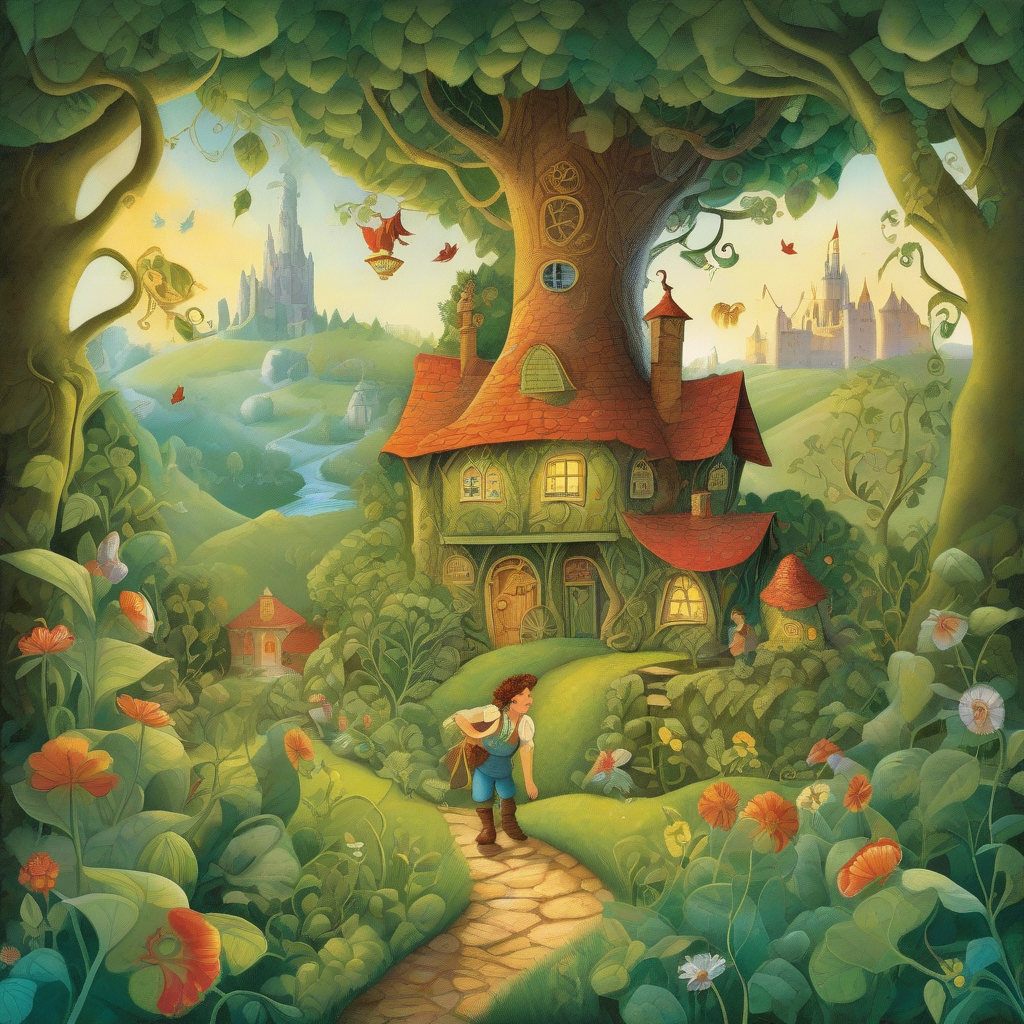
THE WOODMAN AND THE MOUNTAIN FAIRIES
by William Elliot Griffis
Adapted Version
Keel Wee lived in a village. He had kind people. He had a bull. The Bull was very gentle. Children played with him. He was a good friend. Keel Wee cut wood all day. He sold it in the village market. This was his simple, happy life.
One morning, Keel Wee went to the mountain. He took his sharp axe. He wanted to cut much wood. The Bull stayed safe at home. Keel Wee walked far up the mountain path. He needed to find good, tall trees.
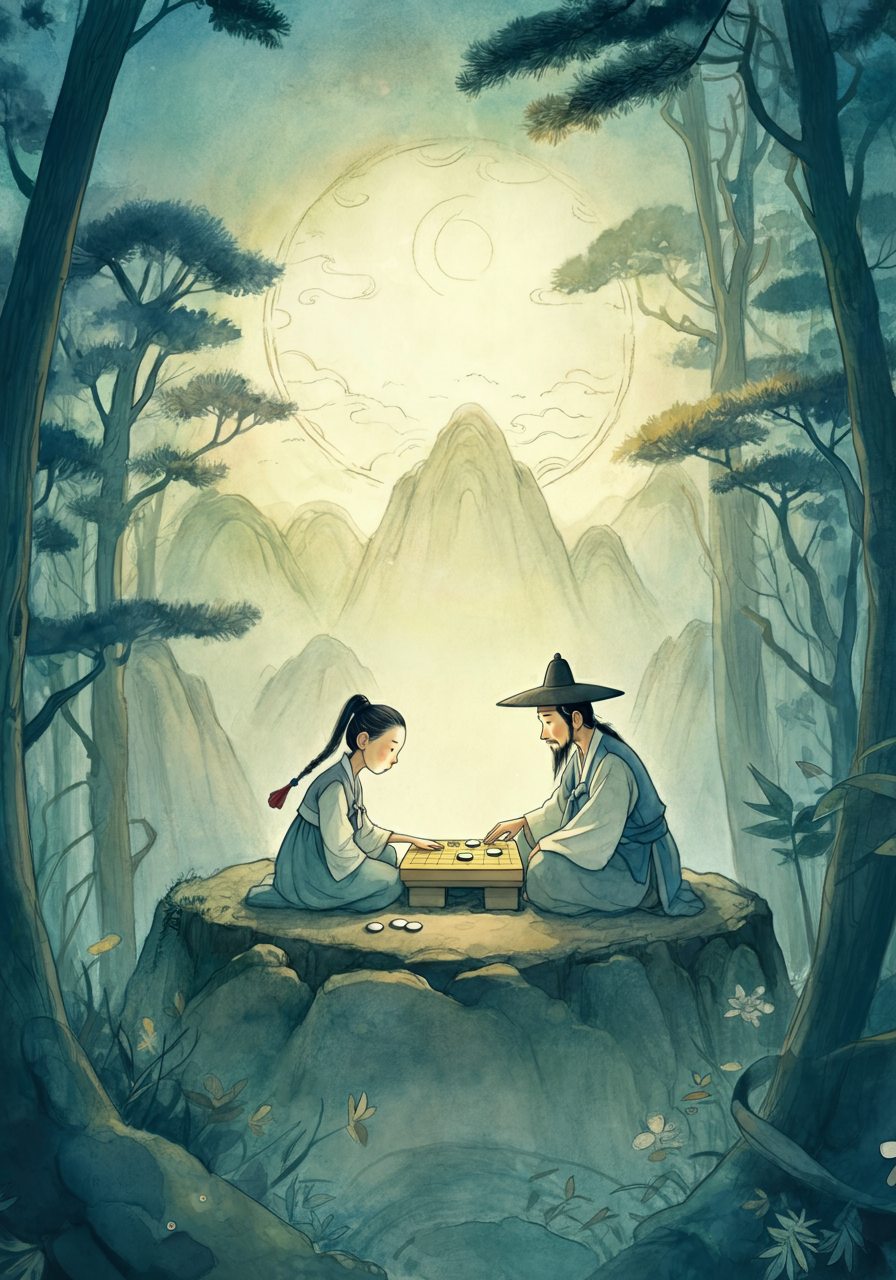
Keel Wee came to a quiet clearing. He saw two strange beings there. They were First Fairy and Second Fairy. They had very long, dark hair. Their clothes were old and pretty. They sat on big, flat stones. They played a game with small stones. Keel Wee watched them without sound. They looked very wise and still.
Keel Wee liked the game very much. He watched all single move. He forgot his manners then. He wanted to move a game stone. He reached out his right hand. First Fairy gave his fingers a light touch. It was a gentle warning. First Fairy put a seed in his mouth. Keel Wee could not speak at all. He could not make any sound.
Keel Wee watched and watched. He looked at the black and white stones. His eyes never closed. He forgot about all time. He forgot about his hunger. He forgot about his home. He forgot about his kind people. He just watched the quiet game.
Then, Keel Wee's axe handle broke. It turned to fine dust. His chin fell down. He lost his strong support. He tumbled over then. The game stones scattered all around. Keel Wee looked up quickly. The fairies were gone. They had just vanished away.
Keel Wee felt very, very old. His body was stiff and sore. He touched his face with his hand. He had a long, white beard. His hair was long and white too. His clothes were now torn rags. His nails were long like bird claws. He felt very confused and strange.
Keel Wee slowly walked down the mountain. He saw his village below. It was very, very new now. New, tall houses stood there. Tall poles had long, shiny wires. Strange, big cars moved on tracks. These were houses on wheels. They had no horses. Keel Wee felt very lost and scared.
People in the village stared at Keel Wee. They whispered about him. He looked like an old mountain man. His clothes were so old and torn. His long white hair was very strange. Children ran away from him. Even the beasts made loud noise. Keel Wee felt very, very sad.
Keel Wee saw a kind man. The Kind Scholar wore white, clean clothes. Keel Wee bowed low to him. The small, hard seed fell from his mouth. Now Keel Wee could speak again. He felt a little hope then. He wanted to ask many things.
Keel Wee asked, "Where is my wife? Where are my children?" He told his name. He said, "Many years passed." "Five hundred years have gone by." "Your people are not here now." "They lived here long ago." "Their graves are in the old field." Keel Wee felt great, deep sadness.
Keel Wee knew now. So much time had passed him by. He felt very, very alone. He went to the old graveyard. He looked for his people's graves. He found the right place. His wife and children were there. He sat by their smooth stones.
The next morning, Keel Wee was gone. He was not there anymore. But pretty, new flowers grew on the grave. They were strange, lovely mountain flowers. No one had seen them before. They grew where Keel Wee had been. They were a gentle memory.
Original Story
THE WOODMAN AND THE MOUNTAIN FAIRIES
Over a half thousand years ago there lived in a northern village, near Ping Yang, a wood-cutter named Keel Wee.
He owned a sturdy bull that carried on its back the fuel which he daily cut on the mountains and sold on the main street of his village, at the fair, which was held every fifth day. The docile brute could carry a load of faggots and brushwood piled many feet high over his head and tied down with ropes, so that at a distance nothing but his legs were visible. This beast, although so huge, was the gentlest creature imaginable. The children were all very fond of the big fellow and were accustomed to play with him as if he were one of them, or at least like a pet dog. The reason of this was that when but a week old the bull-calf had been taken from his cow-mother and brought up in the family with the girls and boys. Only the puppy dog, that also occupied the house with the young folks, was a great favorite.
On a fine summer morning, Keel Wee, leaving his beast behind, went up on the mountain and cut enough wood to load up and bring down on another day.
His wife, as she shouted good-bye, told him to be sure and be home in time for supper, for their eldest son had gone a-fishing and a good string of perch was expected.
Shouldering his axe, he started up the mountain path. He had to go pretty far, for near towns or cities in Korea all the timber had long since been cut away. Every year the woodmen have to search farther afield to find fuel.
Arriving in the woods where there was a clearing, Keel Wee prepared to wield his trusty axe. He was about to take off his big hat and outer coat and lay about him, when he spied, at some distance off, two fairy-like beings. They had long hair, looked very wise and were dressed in costume of the Chow dynasty of two thousand years ago. They sat on stones and played the game of go-ban.
Coming near, the woodman took a respectful attitude, and, looking on, soon became interested in the moves of the players. So far from being at all disconcerted at the presence of a stranger, the two fairies seemed by eye-winks to invite him to look on. Feeling quite proud to be thus honored, Keel Wee, leaning his chin upon the handle of his axe, became absorbed in the game and by and by grew quite excited. Forgetting himself and his manners, he stretched forth his right hand to move one of the pieces. At once the fairy nearest to him gave him a crack on the fingers for his impudence, and jerked Keel Wee’s arm away. Then without saying a word, he took out from his wallet something that looked like a persimmon seed and put in the woodman’s mouth. After this all three were perfectly quiet.
Hour after hour the game proceeded and the players grew more intensely interested. As for Keel Wee, his eyes never winked, so hard did he look at the yellow board covered with the black and white pieces. Several times, when he thought he saw how the fairy on his right could beat in the game, or the one on his left make a better move, he felt like telling one or the other so. When, however, he tried to move his tongue, he found he could not speak, or utter a cry. Somehow he felt as if he were in a dream.
Yet all the time he became more and more wrapped up in the game, so that he determined to see the end of it and know which player had beaten. He forgot that with mountain spirits there is no night or morning, or passing of the hours, nor do they care anything about clocks or bells, because in fairy-land there is no time.
All the while Keel Wee was leaning with his chin on the stout axe-handle, holding it with both hands under his neck. He took no note of the sun or stars, daylight or darkness and he felt no hunger.
Suddenly the timber of his axe seemed to turn to dust and his chin fell. The next thing he knew he had lost his support. Down went his head, and forward fell his body as he tumbled over, upsetting the checker-board, breaking up the game and scattering the round pieces hither and yon over the ground.
Awaking as out of a sleep, and thoroughly ashamed of himself for his impoliteness, he tried to pick himself up and humbly apologize for the accident which he had caused by his own rudeness. He expected and was ready for a good scolding. But when he looked up, the fairies were gone. Nothing whatever was seen of them or of the playboard and checkers, nor any signs of their having been there, except that when he put his hand on the flat stones, which they had used as seats, he found them warm to his touch.
But where was his axe-handle and what had happened? When he had left home, he had come straight from the barber shop, with his face smooth and clean shaven. Now he put his hand to his breast and found that he had grown a long white beard. As for the iron axe-head, it was there, but rusty and half buried in the ground. He had worn one of the big farmer’s hats, which, when turned upside down, might hold a bushel or two of turnips, and when fastened to his head spread over his shoulders like a roof. Where could it be? He looked about him to find it, but saw only the bits of the slats inside the frame and a few scraps of what remained, for the rest had long ago rotted away. Meanwhile he had discovered that his joints were stiff, and he felt like an old man. His clothes were a mass of rags, his hemp sandals were no more, and, on both fingers and toes, had grown long nails like bird’s claws. His hair had burst its topknot string and hung down his back like a woman’s, only it was grayish-white.
Wondering what it all meant, Keel Wee hobbled down the mountain and found the road that ran into the main street of his village. Rocks and hills, rivers and rills were there, but what a change! Instead of the two grinning idol posts, of male and female faces, carved out of trunks and trees, with sawed-out teeth painted white, and artificial ear flaps of wood nailed on, such as had stood before every Korean hamlet since the days of Kija, there was a line of high thick poles, with iron wire stretching from one to the other and for miles in the distance. These, he found out afterward, were called “lightning-thread-trees” (telegraph poles). In place of the rambling and sprawling three-sided thatched houses and yards, divided off with mats hung from sticks, there was a well-built but odd-looking office of painted wood, with openings through which he saw Korean young men sitting. They were dressed in strange clothes and were fingering outlandish-looking clicking instruments.
His curiosity prompted him to go up and look more closely, when something bumped against his nose and nearly knocked him over. When he tried again to get closer, his face was flattened, his nose nearly broken, and his lips knocked against his teeth so that they swelled. Feeling with his hands to solve the mystery, he touched something hard, which he could yet see through. Just then he heard a young man inside shout to him in Korean:
“Here, you mountain daddy, let that glass alone.”
“Glass? Glass?” thought Keel Wee. “What is that?” Yet he could not speak.
He had hardly drawn a long breath when, looking down along two lines of shining iron in the street, he saw a house on wheels coming right at him. There was no horse, no donkey, no bull, no man pulling or pushing it, but overhead was a long pole, at the end of which, where it touched a string, as he thought, though it was an iron wire, was something that looked like a squirrel. It was going round and round as if turning somersaults and seemed to be pushing the moving house along. Inside, near the same stuff which he had already heard was glass, sat a dozen or so Koreans. The whole thing, wheels and all, nearly ran over him as it thundered by, and his mouth opened in wonder, while a man on the end shouted rudely:
“Hello, old goblin, where did you get your pumpkin mouth? Look out or you’ll swallow the moon. Get out of the way of the trolley.”
Thus did the man they called conductor, or guard, make fun of the poor old fellow, for indeed he did look like one of the mummers, who on New Year’s Eve amuse or scare the children by putting on their shoulders the huge round devil heads and false faces that represent the aborigines of Korea and the goblins that once lived in the mountains. These masks are usually shaped like a melon and are cut with eyes, nose and mouth, like those which American boys have fun with on All Hallow Eve.
This was just the trouble. The woodman in tatters, with no topknot, long hair down his back and a white beard floating over his breast, leaning on a long white stick as he hobbled down the street, looked just like one of the ancient aborigines that had long ago been driven into the mountains. Nurses and old women frightened naughty children by simply mentioning their names. When one of these mountain men, odd creatures that were half savage in dress and ways, came into the town, all the children laughed and the big dogs barked, while the little ones ran away, for the sight was so unusual. Even the bulls bellowed, the donkeys balked, and the pigs squeaked, as Keel Wee came near. No wonder he was taken for a mountain granddaddy, or a bumpkin dressed up like one, for few of the city or village folks had really ever seen one of the mountain aborigines, any more than they had seen tigers, that are plentiful farther away, but which only the hunters ever caught sight of.
More and more bewildered, Keel Wee wended his way further into the town. He saw that the men no longer wore topknots, or chignons, nor did the lads have on the long braid down their back, which showed that they were youths, but not married yet. Just then some rough boys, supposing that maybe some rustic gawk had mistaken the time of year, jeered at him and cried:
“Hello, hermit, do you think it’s New Year’s Eve?”
Keel Wee thought he had better ask some questions. So catching sight of a dignified looking gentleman, in black broad-brimmed hat and flowing white clothes, who was coming down the street and toward him, Keel Wee bowed his head low, almost to the ground. As he did so, the stone put in his mouth by the fairies dropped out, and his tongue was loosed. He inquired as follows:
“Exalted sir, can you tell me where may be the wretched hut of my miserable wife and children? She was the daughter of Gee Kim, and your contemptible slave is Keel Wee.”
The gentleman, whose dress showed that he was a scholar and person of rank, looked long and hard at the questioner, to satisfy himself that he was not being mocked, or imposed upon by a jester, rope-dancer, sorcerer, or some such disreputable person, and then cried:
“Heavens! man, are you a beggar-spirit of the mountains? Your speech sounds like the dialect spoken in these parts five hundred years ago. In that time such a family lived here, but the head of it, a wood-cutter and fuel-seller, is reported to have gone up into the mountains and was eaten up by a tiger. Yonder in the graveyard are buried ten or more generations of his descendants.”
“Tell me, kind sir, what has happened here since King Wang died. It was under his reign that I was born and lived in this village.”
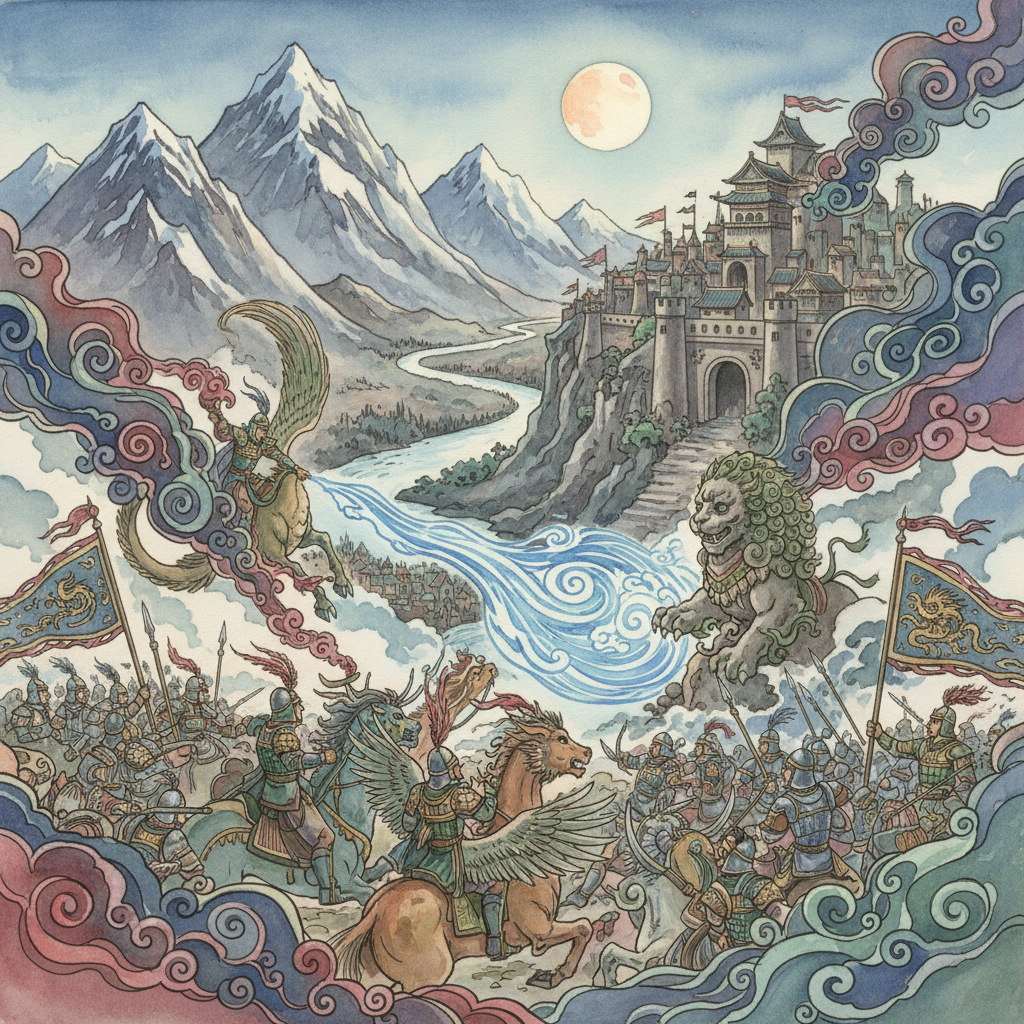
Still eyeing the questioner, as if expecting to see him jump out of his rags and declare himself a mummer and the whole affair a joke, the kindly gentleman proceeded to give in outline the history of Korea during the previous five hundred years. There had been many kings. The Tartars first, and then the Japanese had invaded the land. A great war between the Mikado’s men and the Chinese had taken place. It was just over and now people rode in cars, talked hundreds of miles over wires, and traveled over iron rails as fast as a dragon could fly, drawn by a steel horse that drank water and fed on wood and black stones that burned. In a word, Korea was in an “era of civilization.”
This was too much for Keel Wee. He now realized that he had lived ten times longer than the average man. So, hobbling over to the graveyard, he stumbled among the mounds until he found that one of his clan where the bones of his wife and children lay. Next morning, all that was seen of Keel Wee was a mass of dust, rags, some bones, and much long white hair. Yet, when they buried him, there sprang up around and on his grave strange flowers that no one had ever seen in city or village, but which bloomed only on the high mountains.
Moral of the Story
null
Characters

Keel Wee ★ protagonist
Initially, a sturdy wood-cutter. After the time skip, he is described as an old man with stiff joints, long nails like bird's claws on fingers and toes, and a body that eventually turns to dust and bones. His clothes become a mass of rags, and his hemp sandals are gone.
Attire: Initially, a wood-cutter's practical attire, including a 'big hat' that could hold a bushel or two of turnips when inverted, and an outer coat. After the time skip, his clothes are a 'mass of rags', and his hemp sandals are gone, implying a traditional Korean peasant's attire initially.
Wants: Initially, to cut wood for his family. Later, to understand what has happened to him and his village, and to find his family.
Flaw: His intense absorption in the go-ban game leads him to lose track of time and his own life, causing him to miss 500 years. His impudence also earns him a magical punishment.
Transforms from a young, active wood-cutter into an ancient, bewildered old man who has lost 500 years of his life. He learns the devastating truth of time's passage and eventually finds peace in death, reuniting with his family's lineage.
Curious, easily absorbed, respectful (initially), impudent (when trying to move a go-ban piece), bewildered, humble, sentimental (visiting his family's grave).

The Sturdy Bull ◆ supporting
A huge, sturdy bull, capable of carrying faggots and brushwood piled many feet high, so that at a distance only his legs are visible. Described as the gentlest creature imaginable.
Attire: Carries ropes to tie down its load of faggots and brushwood.
Wants: To serve Keel Wee by carrying wood.
Flaw: None apparent in the story.
None, serves as a consistent element of Keel Wee's initial life.
Docile, gentle, beloved by children.

First Mountain Fairy ◆ supporting
Fairy-like being, with long hair. Sits on stones.
Attire: Dressed in costume of the Chow dynasty of two thousand years ago. This would imply flowing, layered robes, possibly silk, with wide sleeves and intricate patterns typical of ancient Chinese nobility, though the story is Korean. Given the Korean context, it might be a stylized interpretation of ancient court attire, perhaps with elements of hanbok precursors.
Wants: To play the game of go-ban, existing outside of human time.
Flaw: None apparent.
None, remains unchanged.
Wise, calm, observant, subtly inviting (via eye-winks), stern (when punishing Keel Wee's impudence), indifferent to human time.

Second Mountain Fairy ◆ supporting
Fairy-like being, with long hair. Sits on stones.
Attire: Dressed in costume of the Chow dynasty of two thousand years ago. This would imply flowing, layered robes, possibly silk, with wide sleeves and intricate patterns typical of ancient Chinese nobility, though the story is Korean. Given the Korean context, it might be a stylized interpretation of ancient court attire, perhaps with elements of hanbok precursors.
Wants: To play the game of go-ban, existing outside of human time.
Flaw: None apparent.
None, remains unchanged.
Wise, calm, observant, subtly inviting (via eye-winks), indifferent to human time.

The Dignified Gentleman ◆ supporting
A dignified-looking gentleman, implied to be of average build for a scholar of his time.
Attire: Dressed in a black broad-brimmed hat and flowing white clothes, indicating he is a scholar and person of rank. This would be a traditional Korean 'gat' (hat) and a 'po' (outer robe) or 'durumagi' (overcoat) made of fine white linen or silk.
Wants: To understand Keel Wee's strange appearance and questions, and to provide historical context.
Flaw: None apparent.
None, serves as an expository character.
Dignified, cautious (initially), kind, informative, patient.
Locations

Mountain Clearing
A clearing within a dense forest on a Korean mountain, where timber has been cut away in areas, leaving space for two ancient-looking fairies to play go-ban on flat stones.
Mood: mysterious, serene, timeless
Keel Wee encounters the mountain fairies and becomes absorbed in their game of go-ban, unknowingly spending centuries there.

Keel Wee's Village Main Street (Future)
The main street of Keel Wee's village, drastically transformed over centuries. It now features two lines of shining iron rails, houses on wheels (trolleys), and new, unfamiliar architectural styles, replacing the traditional Korean idol posts.
Mood: bewildering, chaotic, modern
Keel Wee returns to his village after centuries, finding it completely transformed by modern technology and culture, leading to his realization of lost time.

Keel Wee's Clan Graveyard
A traditional Korean graveyard with numerous earth mounds, where generations of Keel Wee's descendants are buried. It is a place of quiet reflection and the final resting place for Keel Wee himself.
Mood: somber, reflective, peaceful
Keel Wee finds the graves of his family and ultimately turns to dust, with unique mountain flowers blooming on his grave.
Story DNA
Moral
null
Plot Summary
Keel Wee, a Korean woodcutter, encounters two ancient fairies playing a game of go-ban on the mountain. Absorbed in watching, he loses all sense of time, and when he finally stirs, he finds centuries have passed, and he has aged dramatically. Descending to his village, he discovers a modern world he doesn't recognize, filled with strange technology and customs. A scholar confirms that five hundred years have elapsed, and his family is long dead. Overwhelmed by the loss and the passage of time, Keel Wee visits his family's grave, where he turns to dust, leaving behind only strange mountain flowers.
Themes
Emotional Arc
innocence to wisdom
Writing Style
Narrative Elements
Cultural Context
The story implicitly references the rapid modernization of Korea, including the introduction of telegraphs and trolleys, and mentions historical invasions by Tartars and Japanese, culminating in a 'great war' between Japanese and Chinese, likely alluding to events around the late 19th/early 20th century.
Plot Beats (14)
- Keel Wee, a woodcutter from a northern Korean village, lives a simple life with his family and a beloved bull.
- One summer morning, he goes to the mountain to cut wood, leaving his bull behind.
- Deep in the woods, he discovers two ancient fairies playing a game of go-ban, dressed in Chow dynasty costumes.
- Keel Wee becomes engrossed in the game, and when he tries to interfere, one fairy gives him a crack on the fingers and places a persimmon seed-like object in his mouth, rendering him speechless.
- He watches the game for what feels like hours, losing all track of time, hunger, and his surroundings.
- Suddenly, his axe handle crumbles to dust, causing him to fall and disrupt the game; the fairies vanish.
- Keel Wee realizes he has aged dramatically, with a long white beard, ragged clothes, stiff joints, and long nails.
- He descends the mountain to find his village utterly transformed, with telegraph poles, strange buildings, and a 'house on wheels' (trolley car).
- Villagers mock his appearance, mistaking him for an ancient mountain goblin or hermit.
- He approaches a dignified scholar, and as he bows, the object in his mouth falls out, allowing him to speak.
- Keel Wee asks about his wife and children, identifying himself, but the scholar reveals that five hundred years have passed and his family's descendants are long dead.
- The scholar briefly recounts the intervening centuries of Korean history and technological progress.
- Keel Wee, realizing the immense passage of time, goes to the graveyard and finds the grave of his wife and children.
- The next morning, Keel Wee is found as a pile of dust and bones on the grave, and unique mountain flowers bloom around it.