LOIHTIJA JA HÄNEN KASVATTINSA
by Jalmari Finne
Adapted Version
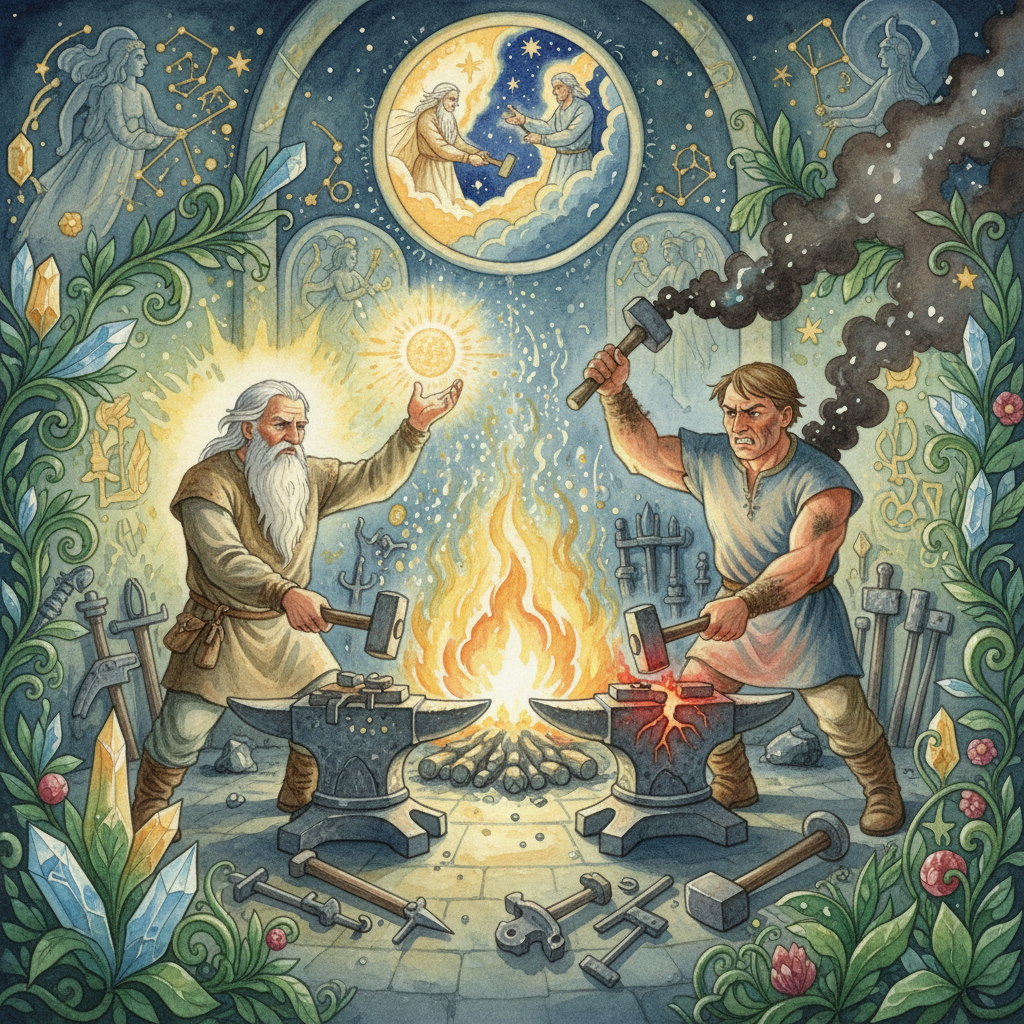
Once, a Sorcerer wanted to teach boys magic. He said fathers could find sons in three years. If not, the sons stayed with him.
Many boys came. A widow's clever son came too. He learned all the Sorcerer's magic fast.
The three years ended. The boy wrote to his mother. "You will know me," he wrote. "I will hop on others' backs."
The Sorcerer made boys into black horses. They all looked the same. Only the mother saw her son hop. "This is my son!" she said.
The next day, he made them doves. Again, only the mother saw her son hop. "This is my son!" she said.
On the third day, he made them geese. The mother saw her son hop again. The Sorcerer let him go.
The clever boy wanted to stop the Sorcerer. He became a black horse. "Sell me," he told his mother. "Keep the halter."
The mother took the horse to town. The Sorcerer bought it. He took the horse home.
The horse became a small mouse. It ran away. The boy went back to his mother.
He became a horse again. His mother sold him again. The Sorcerer bought him again. The boy escaped as a mouse again.
The boy became a horse a third time. His mother forgot the halter. The Sorcerer trapped him.
The boy tried to change into small animals. He could not escape.
The Sorcerer rode the horse to a priest. The boy became a man. He hid in a well.
The Sorcerer went into the well. The boy became a fish. The Sorcerer became a big fish.
The boy jumped into a bucket. He became a ring. A kind girl took the ring.
The Sorcerer asked for the ring. The ring said, "Break me on the step. Hide one piece under your foot."
The girl broke the ring. She hid a piece.
The Sorcerer became a black rooster. He tried to eat the pieces. The hidden piece became a hawk. The hawk chased the rooster away. The Sorcerer ran off. He lost his magic.
The boy went home to his mother. He told all the Sorcerer was gone. The other boys were free.
The boy and his mother lived happy together. Being clever and loving can help you win.
Original Story
LOIHTIJA JA HÄNEN KASVATTINSA.
Loihtija antoi kuuluttaa, että hän ottaa kasvattaakseen kaikkien herrojen ja pappien poikia ja antaa heille kaiken tietonsa, ja isät saavat poikansa takaisin, jos he kolmen vuoden päästä voivat tuntea kukin omansa. Mutta jos isä ei poikaansa tunne, jää poika loihtijan omaksi.
Niiden monien poikien joukossa, jotka tulivat loihtijan oppiin, oli erään lesken poika. Kolme vuotta lohtija näitä poikia kouluutti, mutta lesken poika oli kaikista viisain ja omisti itselleen kaikki loihtijan taidot.
Jo alkoi kulua kolme vuotta umpeen, ja se aika läheni, jolloin kunkin pojan isä saisi tulla omaa poikaansa tunnustelemaan. Poika kirjoitti äidilleen kirjeen, jossa hän sanoi:
— Sinä, äiti, et minua muusta tunne kuin siitä, että loihtikoon loihtija minut millaiseksi tahansa minä hyppään toisten selkään. Sen nähdessäsi sanot:
— Tämä on minun poikani!
Määrä-päivänä tulivat kaikki herrat ja papit poikiaan hakemaan. Silloin loihtija ajoi ne kaikki sileälle nurmelle muuttaen ne mustiksi oriiksi, ja ne olivat aivan toistensa näköisiä.
Ei kukaan muu voinut omaa poikaansa tuntea kuin leskiakka, joka sanoi:
— Tämä on minun poikani!
Loihtija kiisti vastaan ja sanoi, että se ei ollut totta, mutta lupasi seuraavana päivänä panna heidät uuden koetuksen alaiseksi.
Kun seuraava päivä tuli, muutti hän kaikki pojat kyyhkysiksi. Ei nytkään kukaan muu kuin leskiakka tuntenut poikaansa. Hän sanoi:
— Tämä on minun poikani!
Taas kiisti loihtija vastaan, mutta lupasi vielä seuraavana päivänä panna koetuksen toimeen. Jos leskiakka silloin arvaisi poikansa, niin saisi hän pojan omakseen.
Kolmantena päivänä hän muutti kaikki hanhiksi. Leskiakka tunsi taas poikansa, ja loihtijan täytyi antaa leskelle hänen poikansa, niinkuin oli luvannut.
Aamulla sanoi poika äidilleen:
— Minä olen kaiken taidon oppinut loihtijalta ja tahdon hänet kukistaa. Siksi minä aamulla muutun mustaksi oriiksi. Mene sinä sitä kaupunkiin myymään. Kun loihtija tulee, niin myy minut hänelle, mutta jätä päitset päähäni.
Aamulla poika sitten muuttui mustaksi oriiksi, ja äiti läksi häntä kaupungille kauppaamaan. Loihtija tuli torille, tunsi heti pojan, vaikka hän olikin itsensä toiseksi muuttanut ja sanoi leskiakalle:
— Paljonko tahdot hevosestasi?
— Kolme sataa minä tahdon, vastasi akka.
Loihtija maksoi hänelle rahat, nousi hevosen selkään ja ajoi hänen kanssaan kotiaan kohden sanoen hevoselle:
— Nyt sinä olet minun hallussani ja nyt minä en laskekaan sinua enää pois. Kyllä minä nyt osaan sinut niin teljetä, ettet ikänäsi pakoon pääse!
Hän vei hevosen talliin ja sulki sen sinne kolminkertaisten lukkojen taakse.
Mutta tuskin hän oli ovet sulkenut kun hevonen kaatua romahti tallin permannolle ja muuttui hiireksi. Siitä hän sitten oven raosta hiipi pois ja tuli äitinsä luo.
Siellä hän sanoi äidilleen:
— Aamulla minä taas muutun hevoseksi, ja sinä saat lähteä minua myymään torille.
Aamulla leskiakka jälleen meni torille ja loihtija tuli hänen luokseen ostaen hevosen itselleen kuudesta sadasta. Hän nousi hevosen selkään ajaen kotiaan. Sinne tultuaan hän sulki hevosen kuuden lukon taakse.
Mutta tuskin hän oli ovet sulkenut, kun hevonen kaatua romahti permannolle ja muuttui hiireksi ja poika palasi äitinsä luo.
Taas sanoi hän äidilleen:
— Aamulla minä muutun jälleen mustaksi oriiksi ja sinä saat lähteä minua kaupitsemaan. Mutta muista, että suitset saat antaa ostajalle, vaan et päitsiä.
Akka meni aamulla oritta myymään ja taas osti loihtija sen häneltä ja maksoi yhdeksän sataa siitä. Mutta akka olikin unohtanut päitset oriin päähän.
Nyt sanoi loihtija:
— Kylläpä taisit luotani osata paeta, mutta nyt et enää pääse!
Päästyään kotiaan, muistikin äiti, unohtaneensa päitset oriin päähän ja sanoi epätoivoissaan:
— Nytpä taisin sinulle, oma poikani, kuoleman tuottaa!
Loihtija vei oriin kotiaan ja sulki sen yhdeksän lukon taakse. Yöllä poika koettaa paeta. Hän muuttui hiireksi, mutta ei päässyt. Hän muuttui torakaksi, mutta ei pääse. Hän muuttuu luteeksi, mutta ei pääse.
Aamulla tuli loihtija ja sanoi:
— Etpä päässytkään pakoon enää minun luotani.
Hän meni kaupunkiin ratsastaen oriin selässä ja meni papin kartanoon. Täällä hän sitoi hevosen patsaaseen kiinni mennen itse papin luo oritta kauppaamaan. Pappi mielistyi siihen ostaen sen korkeasta hinnasta.
Mutta kartanolla heitti hevonen itsensä maahan muuttui mieheksi ja hyppäsi pihalla olevaan kaivoon.
Loihtija katseli papin ikkunasta ja näki, ettei hevosta enää ollutkaan kartanolla. Hän juoksi kiireimmän kautta sinne, ja katseltuaan ympärilleen hän näki pojan paenneen kaivoon.
Silloin loihtija kiipesi kaivon vinttiä myöten sinne. Nähdessään hänen tulevan, muuttihe hän kiiskiksi. Silloin loihtija muutti itsensä haueksi ja aikoi syödä kiiskin.
Kiiski pakeni haukea ja kun samalla papin piiat olivat vettä noutamassa ja laskivat sangon kaivoon, hyppäsi poika siihen ja muuttui sormukseksi.
Piiat ottivat sormuksen ja veivät sen papin tyttärelle.
Mutta noustuaan kaivosta kuuli loihtija, miksi poika oli muuttunut ja alkoi anoa papin tyttäreltä sormusta. Silloin sormus alkoi haastaa:
— Heitä minut kynnystä vasten niin, että minä menen moneksi muruksi, mutta yksi muru pane jalkasi alle.
Papin tyttö teki niin ja heitti sormuksen kynnystä vasten niin että se särkyi tuhanneksi kappaleeksi. Yhden kappaleen hän piilotti jalkansa alle.
Silloin muuttui loihtija mustaksi kukoksi ja alkoi nokkia palasia suuhunsa. Mutta kun papin neiti nosti jalkaansa, muuttui se yksi sormuksen palanen kanahaukaksi ja söi kukon suuhunsa. Ja niin loihtija menetti henkensä.
Sitten palasi poika äitinsä luo ja lähetti kaikille herroille ja papeille sanan, että nyt on loihtija kuollut ja nyt he saavat poikansa takaisin.
Ilo oli suuri, ja herrat ja papit keräsivät keskuudessaan suuren summan antaen sen pojalle palkinnoksi siitä, että hän oli heidän poikansa pelastanut.
Ja poika eli onnellisena äitinsä kanssa kuolemaansa asti.
Moral of the Story
Cunning and intelligence, especially when combined with love and courage, can overcome even the most powerful and malevolent forces.
Characters

Loihtija (The Sorcerer) ⚔ antagonist
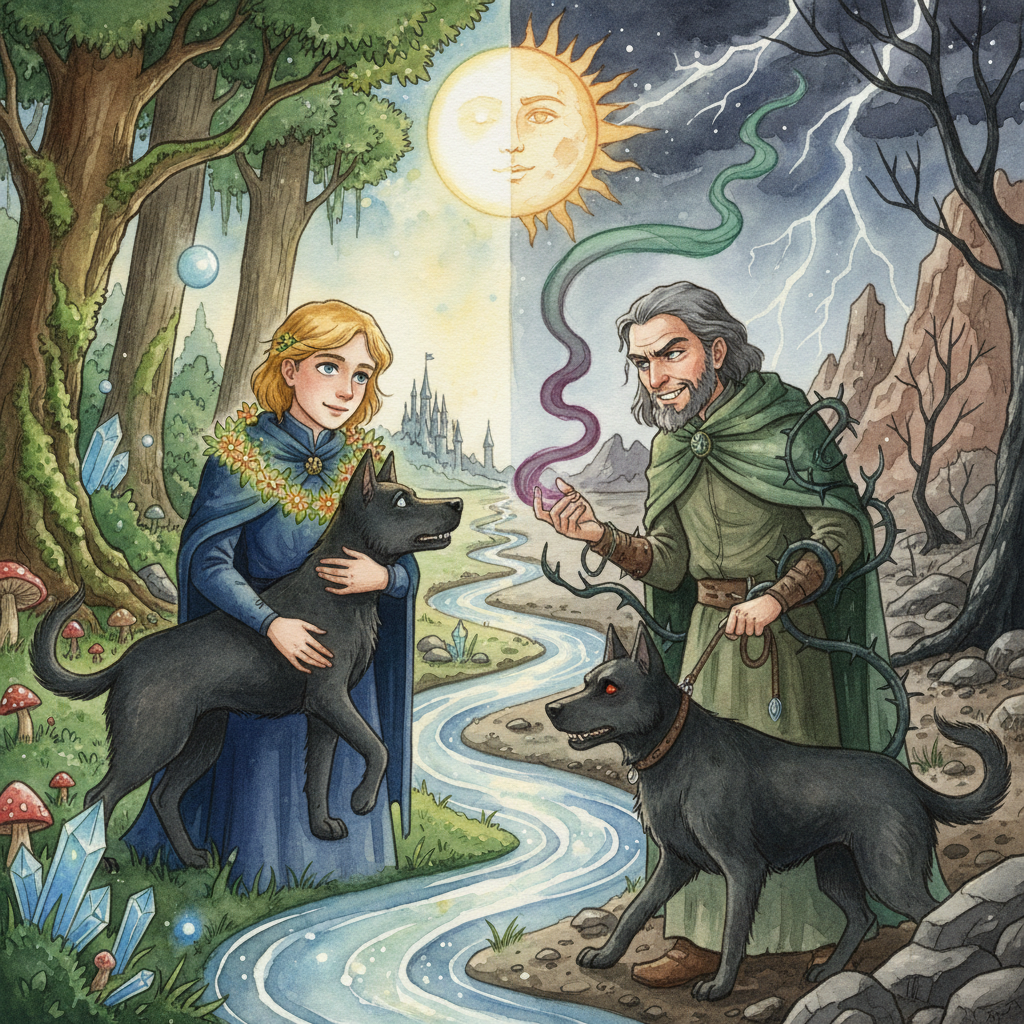
Tall and gaunt, with sharp features and a commanding presence. His skin is pale, and his build is wiry, suggesting a life spent in study rather than manual labor. He moves with a deliberate, almost predatory grace.
Attire: Dark, heavy wool robes in deep shades of forest green or charcoal, possibly with subtle, intricate embroidery in black thread. He might wear a high-collared tunic underneath and sturdy leather boots. His attire is practical for his magical pursuits but also conveys authority and a hint of menace, consistent with 19th-century Finnish gentry or scholars.
Wants: To gain power and knowledge, to prove his magical superiority, and to keep the most talented students for his own purposes.
Flaw: His arrogance and overconfidence. He underestimates the ingenuity and determination of the Widow's Son, leading to his downfall.
Begins as an unchallenged master of magic, confident in his power. He becomes increasingly frustrated and desperate as the Widow's Son outwits him, ultimately leading to his demise.
Cunning, manipulative, powerful, arrogant, and relentless. He enjoys testing others and proving his superiority, but he is also easily frustrated when his plans are thwarted.

Lesken Poika (The Widow's Son) ★ protagonist
Of average height and a lean, agile build, reflecting his quick wit and ability to transform. He has a youthful appearance, but his eyes show a deep intelligence and determination.
Attire: Simple but well-maintained clothes, indicative of a clever peasant boy who has learned to adapt. He might wear a light linen shirt, a practical wool waistcoat in a muted color like forest green or grey, sturdy dark trousers, and worn but comfortable leather boots. His attire allows for freedom of movement.
Wants: To learn magic, to defeat the Sorcerer, and to return to his mother, ensuring her safety and his own freedom.
Flaw: His initial overconfidence in his ability to outsmart the Sorcerer, leading to the incident with the bridle.
Begins as a clever student, then becomes a cunning adversary to the Sorcerer, eventually transforming into a powerful magician who defeats his former master and liberates the other boys, returning home a hero.
Intelligent, resourceful, brave, determined, and loyal to his mother. He is a quick learner and possesses a strong will to overcome adversity.

Leskiakka (The Widow) ◆ supporting
Small and slightly stooped from a lifetime of hard work, but with a surprising resilience. Her hands are gnarled, and her face is lined, but her eyes are sharp and full of love for her son.
Attire: Practical, worn peasant clothing. She would wear a dark, long-sleeved wool dress or a linen smock, covered by a simple, dark apron. A plain, light-colored headscarf (huivi) covers her hair. Her clothes are mended but clean, reflecting her humble status and careful nature, consistent with 19th-century Finnish rural attire.
Wants: To protect her son and ensure his freedom and well-being.
Flaw: Her occasional forgetfulness (e.g., leaving the bridle on the horse) which puts her son in danger.
Remains a steadfast and loving mother, acting as her son's crucial accomplice in his plans against the Sorcerer. She experiences fear and despair but ultimately joy and pride.
Loving, perceptive, brave, and trusting of her son. She is willing to follow his dangerous instructions out of love and faith in his abilities.

Papin Tytär (The Priest's Daughter) ○ minor
Graceful and delicate, as befits a priest's daughter, but with an underlying strength of character. She has a gentle demeanor.
Attire: A modest but well-made dress, perhaps in a soft blue or green linen or cotton, with a high neckline and long sleeves. Her attire is simple but refined, reflecting her social standing and the period's fashion for respectable young women.
Wants: To help the mysterious ring that speaks to her, acting out of compassion and curiosity.
Flaw: None explicitly shown, but her initial naivety could be a vulnerability.
Begins as an innocent bystander, then becomes a crucial, albeit unwitting, participant in the final defeat of the Sorcerer, demonstrating her courage and quick thinking.
Kind, observant, and quick-witted, especially when faced with an unusual situation. She is capable of following complex instructions under pressure.
Locations

Loihtija's Estate Grounds
A wide, smooth grassy lawn, likely part of a larger estate, where the boys are transformed for the recognition tests. The grass is well-maintained, suggesting a cultivated area rather than wild fields.
Mood: Tense, expectant, as fathers try to identify their sons amidst magical transformations.
The Loihtija (sorcerer) conducts the first three tests for the fathers to identify their sons, transforming them into identical animals.

Market Square
A bustling town market square, likely unpaved, where goods are bought and sold. It's a public space where people gather and transactions occur.
Mood: Busy, commercial, but with an underlying tension due to the magical pursuit.
The son, transformed into a black stallion, is repeatedly sold by his mother to the Loihtija in an attempt to escape his grasp.

Loihtija's Stable
A secure stable, part of the Loihtija's home, designed to hold horses. It is described as having multiple locks, indicating a strong, fortified structure.
Mood: Confining, oppressive, a place of capture and attempted escape.
The Loihtija attempts to imprison the transformed son, who repeatedly escapes by changing forms.

Priest's Courtyard and Well
A spacious courtyard belonging to a priest's manor, featuring a prominent well and a statue. The courtyard is likely paved or well-trodden earth, surrounded by the manor buildings.
Mood: Initially calm, then rapidly turns into a scene of frantic pursuit and magical transformation.
The son, as a stallion, is tied to a statue. He escapes into the well, initiating a series of rapid transformations and the final magical duel with the Loihtija.

Priest's Manor Threshold
The entrance area of the priest's manor, specifically the wooden threshold of a doorway, where the final transformation and defeat of the Loihtija occurs.
Mood: Climactic, intense, the final battleground of magic.
The priest's daughter throws the ring (the transformed son) onto the threshold, breaking it into pieces, leading to the final magical confrontation and the Loihtija's demise.
Story DNA
Moral
Cunning and intelligence, especially when combined with love and courage, can overcome even the most powerful and malevolent forces.
Plot Summary
A powerful sorcerer takes in boys, promising to return them if their fathers can identify them after three years, otherwise keeping them. A wise widow's son learns all the sorcerer's magic and, with his mother's help, escapes three identification tests by instructing her on how to recognize him. He then attempts to defeat the sorcerer by having his mother sell him as a transformed horse, but the sorcerer repeatedly buys him. After a near-fatal mistake by his mother, the son is trapped but eventually engages in a final, rapid magical duel, transforming through various forms to ultimately outsmart and destroy the sorcerer, freeing all the other boys and living happily ever after with his mother.
Themes
Emotional Arc
fear to triumph
Writing Style
Narrative Elements
Cultural Context
Jalmari Finne was a Finnish author known for collecting and retelling folk tales. This story reflects common European folk tale motifs of transformation and magical duels, often with a clever protagonist outsmarting a powerful sorcerer.
Plot Beats (17)
- A sorcerer announces he will educate boys, but fathers must identify their sons after three years or lose them.
- Many boys, including a widow's son, are taken in by the sorcerer; the widow's son becomes the wisest and learns all the sorcerer's magic.
- As the three years end, the son writes to his mother, telling her to identify him by his unique action of jumping onto others' backs, regardless of his transformed shape.
- On the first day, the sorcerer transforms all boys into identical black stallions; only the widow identifies her son by his action.
- On the second day, the sorcerer transforms them into doves; again, only the widow identifies her son.
- On the third day, the sorcerer transforms them into geese; the widow identifies her son, and the sorcerer is forced to release him.
- The son, now free, plans to defeat the sorcerer and transforms into a black stallion for his mother to sell, instructing her to keep the halter.
- The sorcerer buys the horse, but the son transforms into a mouse and escapes, returning to his mother.
- The son transforms into a horse again, and his mother sells him to the sorcerer a second time; he escapes as a mouse again.
- The son transforms into a horse a third time, but his mother forgets to remove the halter, allowing the sorcerer to trap him with nine locks.
- Trapped, the son tries to escape by transforming into a mouse, cockroach, and bedbug, but fails.
- The sorcerer rides the horse to a priest's manor to sell him; the son transforms into a man and jumps into a well.
- The sorcerer follows into the well; the son transforms into a ruff (fish), the sorcerer into a pike, chasing him.
- The son transforms into a ring in a water bucket, which is taken by the priest's daughter.
- The sorcerer begs the daughter for the ring; the son, as the ring, instructs her to smash him on the threshold, hiding one piece under her foot.
- The sorcerer transforms into a black rooster to eat the pieces; the hidden piece transforms into a goshawk and devours the rooster, killing the sorcerer.
- The son returns to his mother, informs the nobles and priests, and receives a reward for freeing their sons, living happily ever after.