The black bull of Norroway
by Andrew Lang

The Girl and the Black Bull
Once upon a time, there were three sisters. They lived with their mother.
The oldest sister went to find her fortune. A kind old woman helped her. She saw a big coach. It took her away.
The middle sister went next. The old woman helped her too. She saw a smaller coach. It took her away.
The youngest sister went to the old woman. She looked and looked. She saw a big Black Bull. He came down the road. She was scared. But she got on his back.
They went and went. The bull had a magic bag. She ate from it. They came to a castle. She got a shiny apple. "Save it," they said. They went on. They came to another castle. She got a shiny pear. "Save it," they said. They went on. They came to a last castle. She got a shiny plum. "Save it," they said.
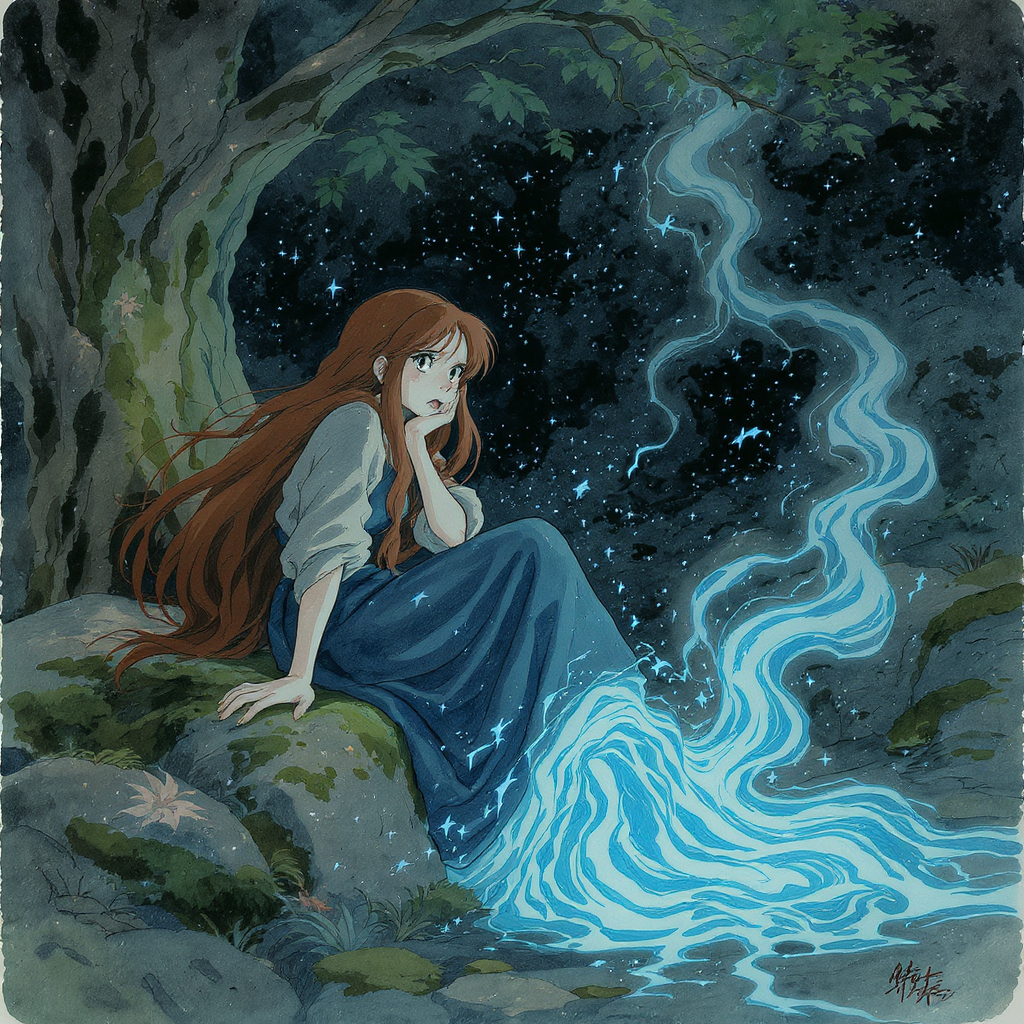
They came to a dark place. The bull had to fight a dragon. "Sit on this stone," he said. "Do not move." She sat. Everything turned blue. He won! She was so happy. She moved her foot. The bull could not find her. She was alone.
She walked and walked. She found a glass hill. She could not climb it. She found a helper. She worked for many days. He made her strong shoes. She climbed the glass hill.
She found the old washerwoman again. A knight needed his dirty shirts washed. The washerwoman tried. Her daughter tried. The shirts stayed dirty. The youngest daughter washed them. They became clean. The washerwoman lied. She said her daughter did it.
The knight would marry the washerwoman's daughter. The youngest daughter was sad. She broke her apple. It was full of gold! She gave it to the washerwoman. "Let me sit with the knight tonight." The washerwoman gave the knight sleepy juice. He slept all night. The daughter sang a sad song.
She broke her pear. It was full of jewels! She gave them away. She got another night. The knight drank sleepy juice again. He slept. She sang her sad song.
The knight heard about the singing. He pretended to drink the juice. She broke her plum. It had the most jewels! She got a third night. She sang her song. The knight was awake! He heard her.
He turned to her. She told him her story. He knew she washed his shirts. He knew she was brave. The washerwoman and her daughter left. They never came back.
The knight and the youngest daughter got married. Kindness and not giving up bring love and happiness. And they lived happily ever after.
Original Story
THE BLACK BULL OF NORROWAY And many a hunting song they sung, And song of game and glee; Then tuned to plaintive strains their tongue, “Of Scotland’s luve and lee.” To wilder measures next they turn “The Black, Black Bull of Norroway!” Sudden the tapers cease to burn, The minstrels cease to play. “The Cout of Keeldar,” by J. Leyden. In Norroway, langsyne, there lived a certain lady, and she had three dochters. The auldest o’ them said to her mither: “Mither, bake me a bannock, and roast me a collop, for I’m gaun awa’ to seek my fortune.” Her mither did sae; and the dochter gaed awa’ to an auld witch washerwife and telled her purpose. The auld wife bade her stay that day, and gang and look out o’ her back door, and see what she could see. She saw nocht the first day. The second day she did the same, and saw nocht. On the third day she looked again, and saw a coach-and-six coming along the road. She ran in and telled the auld wife what she saw. “Aweel,” quo’ the auld wife, “yon’s for you.” Sae they took her into the coach, and galloped aff. The second dochter next says to her mither: “Mither, bake me a bannock, and roast me a collop, fur I’m gaun awa’ to seek my fortune.” Her mither did sae; and awa’ she gaed to the auld wife, as her sister had dune. On the third day she looked out o’ the back door, and saw a coach-and-four coming along the road. “Aweel,” quo’ the auld wife, “yon’s for you.” Sae they took her in, and aff they set. The third dochter says to her mither: “Mither, bake me a bannock, and roast me a collop, for I’m gaun awa’ to seek my fortune.” Her mither did sae; and awa’ she gaed to the auld witch-wife. She bade her look out o’ her back door, and see what she could see. She did sae; and when she came back said she saw nocht. The second day she did the same, and saw nocht. The third day she looked again, and on coming back said to the auld wife she saw nocht but a muckle Black Bull coming roaring alang the road. “Aweel,” quo’ the auld wife, “yon’s for you.” On hearing this she was next to distracted wi’ grief and terror; but she was lifted up and set on his back, and awa’ they went. Aye they traveled, and on they traveled, till the lady grew faint wi’ hunger. “Eat out o’ my right lug,” says the Black Bull, “and drink out o’ my left lug, and set by your leavings.” Sae she did as he said, and was wonderfully refreshed. And lang they gaed, and sair they rade, till they came in sight o’ a very big and bonny castle. “Yonder we maun be this night,” quo’ the bull; “for my auld brither lives yonder”; and presently they were at the place. They lifted her aff his back, and took her in, and sent him away to a park for the night. In the morning, when they brought the bull hame, they took the lady into a fine shining parlor, and gave her a beautiful apple, telling her no to break it till she was in the greatest strait ever mortal was in in the world, and that wad bring her o’t. Again she was lifted on the bull’s back, and after she had ridden far, and farer than I can tell, they came in sight o’ a far bonnier castle, and far farther awa’ than the last. Says the bull till her: “Yonder we maun be the night, for my second brither lives yonder”; and they were at the place directly. They lifted her down and took her in, and sent the bull to the field for the night. In the morning they took the lady into a fine and rich room, and gave her the finest pear she had ever seen, bidding her no to break it till she was in the greatest strait ever mortal could be in, and that wad get her out o’t. Again she was lifted and set on his back, and awa’ they went. And lang they gaed, and sair they rade, till they came in sight o’ the far biggest castle, and far farthest aff, they had yet seen. “We maun be yonder the night,” says the bull, “for my young brither lives yonder”; and they were there directly. They lifted her down, took her in, and sent the bull to the field for the night. In the morning they took her into a room, the finest of a’, and gied her a plum, telling her no to break it till she was in the greatest strait mortal could be in, and that wad get her out o’t. Presently they brought hame the bull, set the lady on his back, and awa’ they went. And aye they gaed, and on they rade, till they came to a dark and ugsome glen, where they stopped, and the lady lighted down. Says the bull to her: “Here ye maun stay till I gang and fight the deil. Ye maun seat yoursel’ on that stane, and move neither hand nor fit till I come back, else I’ll never find ye again. And if everything round about ye turns blue I hae beated the deil; but should a’ things turn red he’ll hae conquered me.” She set hersel’ down on the stane, and by-and-by a’ round her turned blue. O’ercome wi’ joy, she lifted the ae fit and crossed it owre the ither, sae glad was she that her companion was victorious. The bull returned and sought for but never could find her. Lang she sat, and aye she grat, till she wearied. At last she rase and gaed awa’, she kedna whaur till. On she wandered till she came to a great hill o’ glass, that she tried a’ she could to climb, bat wasna able. Round the bottom o’ the hill she gaed, sabbing and seeking a passage owre, till at last she came to a smith’s house; and the smith promised, if she wad serve him seven years, he wad make her iron shoon, wherewi’ she could climb owre the glassy hill. At seven years’ end she got her iron shoon, clamb the glassy hill, and chanced to come to the auld washerwife’s habitation. There she was telled of a gallant young knight that had given in some bluidy sarks to wash, and whaever washed thae sarks was to be his wife. The auld wife had washed till she was tired, and then she set to her dochter, and baith washed, and they washed, and they better washed, in hopes of getting the young knight; but a’ they could do they couldna bring out a stain. At length they set the stranger damosel to wark; and whenever she began the stains came out pure and clean, but the auld wife made the knight believe it was her dochter had washed the sarks. So the knight and the eldest dochter were to be married, and the stranger damosel was distracted at the thought of it, for she was deeply in love wi’ him. So she bethought her of her apple, and breaking it, found it filled with gold and precious jewelry, the richest she had ever seen. “All these,” she said to the eldest dochter, “I will give you, on condition that you put off your marriage for ae day, and allow me to go into his room alone at night.” So the lady consented; but meanwhile the auld wife had prepared a sleeping-drink, and given it to the knight, wha drank it, and never wakened till next morning. The lee-lang night ther damosel sabbed and sang: “Seven lang years I served for thee, The glassy hill I clamb for thee, The bluidy shirt I wrang for thee; And wilt thou no wauken and turn to me?” Next day she kentna what to do for grief. She then brak the pear, and found it filled wi’ jewelry far richer than the contents o’ the apple. Wi’ thae jewels she bargained for permission to be a second night in the young knight’s chamber; but the auld wife gied him anither sleeping-drink, and he again sleepit till morning. A’ night she kept sighing and singing as before: “Seven lang years I served for thee,” &c. Still he sleepit, and she nearly lost hope a’thegither. But that day when he was out at the hunting, somebody asked him what noise and moaning was yon they heard all last night in his bedchamber. He said he heardna ony noise. But they assured him there was sae; and he resolved to keep waking that night to try what he could hear. That being the third night, and the damosel being between hope and despair, she brak her plum, and it held far the richest jewelry of the three. She bargained as before; and the auld wife, as before, took in the sleeping-drink to the young knight’s chamber; but he telled her he couldna drink it that night without sweetening. And when she gaed awa’ for some honey to sweeten it wi’, he poured out the drink, and sae made the auld wife think he had drunk it. They a’ went to bed again, and the damosel began, as before, singing: “Seven lang years I served for thee, The glassy hill I clamb for thee, The bluidy shirt I wrang for thee; And wilt thou no wauken and turn to me?” He heard, and turned to her. And she telled him a’ that had befa’en her, and he telled her a’ that had happened to him. And he caused the auld washerwife and her dochter to be burned. And they were married, and he and she are living happy till this day, for aught I ken.(1) (1) Chambers, Popular Traditions of Scotland.
Moral of the Story
Perseverance through hardship and loyalty to one's true love will ultimately be rewarded, while deceit and treachery lead to ruin.
Characters

Third Dochter ★ protagonist
No specific details given, but implied to be beautiful enough to attract a knight.
Attire: Simple homespun dress, later adorned with the jewels from the magical fruit
Brave, resourceful, persistent, loving

Black Bull of Norroway ◆ supporting
Large, muscular, black bull
Helpful, loyal, protective, magical

Young Knight ◆ supporting
Handsome, gallant
Attire: Fine clothing befitting a knight, hunting attire
Gullible, easily deceived, ultimately good-hearted

Auld Washerwife ⚔ antagonist
Warty, wrinkled
Attire: Simple, worn clothing
Deceitful, greedy, manipulative

Eldest Dochter ○ minor
No specific details given.
Attire: Simple dress
Envious, opportunistic
Locations

Witch Washerwife's Cottage
A simple dwelling with a back door used for seeing the future
Mood: Mysterious, magical
The three daughters each visit to find their fortune.

Glen with a Stone
A dark and desolate glen with a single stone for sitting
Mood: Eerie, suspenseful
The bull fights the devil, and the lady breaks her promise.

Hill of Glass
A steep, unclimbable hill made entirely of glass
Mood: Desolate, hopeless
The lady is trapped and must find a way to cross it.

Smith's House
A simple dwelling with a forge
Mood: Industrial, hard-working
The lady serves seven years to earn iron shoes.

Knight's Bedchamber
A richly decorated room with a bed
Mood: Romantic, tense
The lady sings to awaken the knight.
Story DNA
Moral
Perseverance through hardship and loyalty to one's true love will ultimately be rewarded, while deceit and treachery lead to ruin.
Plot Summary
The youngest of three sisters is reluctantly paired with a mysterious Black Bull, who takes her on a magical journey to his brothers' castles, giving her enchanted fruits. When she disobeys his instructions in a glen, he vanishes, leaving her to endure seven years of servitude to climb a glassy hill. She eventually finds him as a knight, cursed and about to marry another, but through her perseverance and the use of her magical fruits, she breaks the spell, exposes the wicked washerwife and her daughter, and marries her true love.
Themes
Emotional Arc
suffering to triumph
Writing Style
Narrative Elements
Cultural Context
This tale is a variant of the 'Animal as Bridegroom' type (ATU 425A), common across Europe, often involving a cursed prince who must be freed by a maiden's loyalty and perseverance. The specific Scottish elements give it a distinct flavor.
Plot Beats (15)
- A lady in Norroway has three daughters who each decide to seek their fortune.
- The first two daughters are sent to an old witch-washerwife, who directs them to coaches-and-six and coaches-and-four, respectively.
- The third daughter is also sent to the washerwife, who directs her to a muckle Black Bull, terrifying the daughter but she is placed on its back.
- The Black Bull carries the daughter on a long journey, providing sustenance from his ears, and they visit his three brothers' castles, where she receives an apple, a pear, and a plum, each with a warning not to break it until in dire straits.
- They arrive at a dark glen where the Bull instructs the daughter to wait on a stone without moving while he fights the 'deil', indicating victory by blue surroundings and defeat by red.
- The surroundings turn blue, and the daughter, overcome with joy, crosses her feet, causing the Bull to be unable to find her upon his return.
- The daughter wanders until she finds a smith, serving him for seven years to earn iron shoes to climb a glassy hill.
- After climbing the hill, she arrives at the old washerwife's habitation, where she learns a knight (her Black Bull) is seeking a wife for whoever can wash his bloody shirts.
- The washerwife and her daughter fail to clean the shirts, but the heroine succeeds, though the washerwife claims her daughter did it.
- The knight and the washerwife's daughter are to be married; the heroine, in despair, breaks her apple, revealing gold and jewels, which she uses to buy one night in the knight's chamber.
- The washerwife gives the knight a sleeping potion, and the heroine laments her journey and loyalty to a sleeping knight.
- The heroine breaks her pear, revealing richer jewels, and buys a second night, but the knight is again drugged and sleeps through her lament.
- The knight, having heard whispers of a noise, feigns drinking the potion on the third night (bought with the plum's richest jewels), hears the heroine's song, and recognizes her.
- The knight and heroine reunite, she tells him her story, and he orders the washerwife and her daughter to be burned.
- The knight and heroine marry and live happily ever after.


