The Son of the Soap Seller
by Unknown
Adapted Version
Ahmed lives with his father. They are poor. Ahmed is a kind boy. Abdullah sells soap. He does not sell much. They have little food. Abdullah is sad. Ahmed hugs his father. "Do not be sad," Ahmed says. "Soon will be better." Ahmed is always kind. He helps his father.
Ahmed walks to school. The sun is hot. He sees people. Soldiers pass. A horse comes. The King rides. A lady in a box. She is Princess. A lion runs out. It is big. Lion nears Princess. She is scared. Ahmed sees the lion. He sees Princess.
Ahmed is brave. He finds a stick. He waves stick. He makes a loud sound. Lion hears sound. It runs fast. Princess is safe. She is not scared. She calls Ahmed. "You are a brave boy," she says. She gives Ahmed gold. Ahmed is happy.
Ahmed and Abdullah use the gold. It is gone. They are poor again. "We must go," Abdullah says. "We go to the city." They walk. Way is long. It is hard. They walk many days. A big storm comes. Rain falls hard. Ahmed sees an old man. He is very tired. The old man gives Ahmed a cup. It is a crystal cup. "This cup sees danger," he says. "It will help you."
A big dust cloud comes. Ahmed and Abdullah get lost. Ahmed is alone. A man comes. "I am your uncle," he says. But it is a Ghool. The Ghool tries to trick Ahmed. Princess rides by. She sees Ahmed. She sees the Ghool. Princess wears a necklace. It shines bright. The Ghool runs away fast. Princess knows Ahmed. "You saved me," she says.
Ahmed finds Abdullah. They are so happy. They join the King's group. They go to the big city. The journey is long. They travel many days. A bad man lives in mountains. He is angry at King. He sends bad men. These men want to hurt King. They plan to hurt him.
Ahmed looks in his cup. He sees the bad men. He sees their bad plan. Ahmed tells the King. The King does not listen. He does not believe Ahmed. Ahmed watches in secret. He sees a bad man. The man comes for King. Ahmed stops the bad man. The King is safe now. He thanks Ahmed.
Ahmed looks in cup again. He sees more bad plans. He stops them all. The King trusts Ahmed now. Ahmed is very clever. The cup helps him. The King is very happy. Ahmed saved him many times. "You are brave," King says. "What do you want? Ask for any thing."
Ahmed asks for Princess. Princess loves Ahmed too. They get married. Ahmed helps the King now. He helps rule the land. Good things happen.
Original Story
The Son of the Soap Seller
Cleverly proving that a princess with a necklace can frustrate the intentions of a Ghool, and that every king should have near his person the owner of a crystal cup.
HERE once dwelt a poor but worthy man named Abdullah in Meshed, the Holy City, the place of pilgrimage, whose beautiful mosque with the golden dome is the glory of the kingdom of Persia. He barely managed to get a living by the sale of soap.
All day long, from sunrise to sunset, he tramped the city, crying out: "O brothers, buy my pure soap. There is none better in the city, as every one knows. Even the little babes would say so if they could but speak."
Still, if you looked closely at it, you would never guess it to be soap; it was black and coarse, and more like wood than anything else. If any unlucky pilgrim used it on his face or hands, it would make his skin burn like fire. But this did not often happen, for the people in Persia do not use much soap on themselves, or their clothes, and sand does very well for cleaning cooking pots and pans. So it was that there were many days when poor Abdullah did not sell enough to buy sufficient bread for himself and his little boy Ahmed.
At such times, the father would creep sadly into his wretched mud- built hovel, and bury his face in his hands, so that he might not see his son trying to keep back the tears caused by hunger. The little fellow, however, now ten years of age, would comfort his father by saying:
"Inshallah"—if God wills—"to-morrow you will sell more soap than you have done for weeks past." And the father, looking into the bright, open face of his boy, would take courage, and pray that this might be so.
But the days went on and things became blacker and blacker, when one day an adventure befell little Ahmed. He was on his way to school, and as the sun was very hot, he sought the shelter of the big plane-trees that lined the banks of the stream flowing down the center of the principal street.
Women were filling their water jugs, or washing clothes; a string of camels were drinking; several donkeys were rolling playfully over and over in the water, and some dyers were wringing out newly-dyed garments, causing waves of many colors to flow past.
Just as Ahmed had stopped to look, a dervish, leading a fine lion by a chain, and some runners with curious hats and coats rushed past, shouting:
"Make way for the King! Turn your faces to the wall!" And there was the great King, seated on a beautiful Arabian horse, surrounded by soldiers. Then there passed a palanquin borne on the backs of four mules.
The party stopped just opposite to Ahmed, and from the palanquin there alighted a lady closely veiled, evidently wishing to inspect some beautiful Meshed silver work. Before she could reach the shop, a great tumult arose among the people. The lion had broken his chain and was madly leaping here and there, tearing and rending and dashing people to the ground. Women fainted, men fled, little children stood still and cried pitifully, some jumped into the stream; the frightened horses dashed madly through the crowd. All was terror and confusion.
Then with a roar the lion sprang upon the princess, and bore her to the ground; but ere he could tear her to pieces, Ahmed had sprang forward, seized a piece of iron, one end of which was red hot, from the shop of a blacksmith, and thrust it furiously into the face of the lion. With a cry of pain and rage the lion left the princess and bounded off to the bazaars, where he did great damage.
As soon as the princess had recovered from her fright, she beckoned to Ahmed to come near, and removing her veil, told him he was a brave little fellow, and ordered one of her servants to give him a purse of gold. Ahmed had never seen anyone so beautiful, and was so lost in wonder, that before he could find words of thanks, the party had passed on.
But when the money was spent, Ahmed and his father began to be in want again. A Jewish pedlar having told him how much better trade was in the capital, they determined to set forth to that city, though the way was long and full of danger. "Better to die in the desert, than in the heart of a great city," said Ahmed.
So they set forth on their journey, sometimes climbing up winding paths among the mountains, at other times traversing the desert, footsore, and weary almost to death, often hungry and thirsty, tormented by the thought that they would fall into the hands of the man-stealing robbers who haunted this great pilgrim road.
On account of the intense heat and the cruel robbers, they traveled by night. In every shadow cast by the moon upon the ground, they thought they saw a robber on his big horse. During the day they slept at wayside inns, and in return for little services rendered by Ahmed to the muleteers, they would give him a handful of rice or bread, or a few dried fruits which kept them from starvation.
So it went on until one night, when searching for the bridge that crosses the Salt River, the sky became suddenly overcast, the rain fell in torrents, and soon the river was in flood. There was nothing to be done but to sit down and wait until the moon should rise. The fierce wind buffeted them, the rain drenched them; they had lost their way, and were at the mercy of wild beasts.
Once, when the wind dropped for a little, out of the darkness came a groan. "Keep still as death, my son," said the father to Ahmed, "for it is the Old Man of the Desert."
Now Ahmed had never before heard of the Old Man of the Desert, and therefore knew no fear, so despite his father's warning, he got up and went in the direction from whence came the groans. As he reached the spot, the moon came out from behind a bank of clouds, and Ahmed saw a poor dervish lying on the sand. He had a leopard skin thrown over his shoulders; by his side lay a big stick studded with sharp nails, and a basin made of the outer skin of a pumpkin in which he collected alms.
"For the sake of the Prophet," he moaned when he saw Ahmed, "give me a drink of water." And Ahmed, filling his pitcher from the river gave him to drink, though the water was somewhat salty.
The water revived the dervish, and he said: "I am Ali, the dervish, and am known throughout Persia. Two months ago I left Mazandaran to go to Meshed. But yesterday the fever seized me. This is the third attack, and, as you know, it is always fatal.
"Stay with me, my son, in this dark hour when I shall pass through the valley of the shadow of death. And when my soul shall have crossed the Bridge of Death, take this little leather bag hanging round my neck, and therein you shall find a tiny cup, cut from a crystal, which if used rightly, shall lift thee to great power and wealth.
"Each morning when you rise, place a drop of pure water in the cup, and look intently therein, and should any danger threaten you or those near and dear to you, it will be made manifest. And if—" but here his strength failed him, his head fell back, and he passed away. Ahmed found the bag and the beautifully cut crystal, just as the dervish had said, and returning to his father, told him all that had happened.
Ahmed did as the dervish had directed him for several mornings, but seeing nothing in the crystal, he dropped the practice. There came a day, however, when they were overtaken by a dreadful dust storm. From across the wide stretch of sand, the wind raged, the sky and sun were blotted out, the air was laden with dust, and the small pebbles and stones carried in the wind cut them until they cried with pain. Shelter there was none.
In fear and pain they ran here and there, and when after several hours of misery, the storm had passed, they could not see each other. They were lost in the cruel desert, with no food, and worse still, no water. Sobbing in despair, Ahmed straggled on. He went like one in a dream. Time after time he fell tripping over rocks and bushes, but he pressed onward. Then came a time when he could go no further, and he lay down to die.
For a long time he slept, and then he was awakened by being shaken. Looking up, he saw an old man smiling and saying: "Why, it's little Ahmed, the son of Abdullah, the Soap Seller. Don't you know me, Ahmed? I am your uncle. Don't cry because you have lost your way. Come, take my hand and we will soon find your father."
Now Ahmed wondered why he had never seen or even heard his father speak of this particular uncle, but he took the old man's hand, and together they set forth. Mile after mile they went, but no trace of his father could be found. Then he sat down crying, and said: "I am so tired, I can go no further." And the old man replied: "Sleep, my son, while I keep watch."
But just as Ahmed was closing his eyes, the old man turned, and Ahmed saw that he had thin legs like those of a sheep. "The Ghool! the Ghool!" he shrieked, and fainted. Then this wicked ogre of the desert began to open Ahmed's coat in order to suck his blood.
But another cry answered that of the boy, and then appeared on the scene a beautiful young woman, carrying in her harid a necklace of gold and silver beads. Casting but one glance at the beads, the old man flew swifter than the wild sheep of the mountains, for the sight of metal rendered him powerless to do harm.
Of course, it was the princess whose life Ahmed had saved in Meshed. The King, her father, happened to be returning from a pilgrimage, and to give a fright to her servants, she had scampered off the track, and thus had found Ahmed. At her request, Ahmed became one of the King's followers, and together with his father, whom they found the next day, they journeyed to the capital.
Some three days' march from the capital, in the mountains near Kazveen, there lived the Old Man of the Mountains, or as he is generally known, the King of the Assassins, with his followers. So great was his power that he had but to say the word and any of his men would throw themselves from the topmost crags to the valleys beneath and be dashed to pieces, or at his bidding, they would travel forth to the most distant parts of the world in order to kill any persons, however great they might be.
When he heard that the King of Persia was collecting an army to destroy both him and his tribe, he became very angry, and said to one of his followers: "Go, rid me of the King of Persia;" and the mart-took bread and water and a sharp dagger, and went.
Now after his narrow escape from the Old Man of the Desert, Ahmed took pains every morning to place a drop of water in the crystal cup and look therein. Nothing appeared until one morning he saw in the bead of water a vision of the King asleep, and standing by him a robber with an uplifted dagger, about to strike. Hurrying to the King's presence, he warned him of the danger, but the King only laughed, for he trusted his guards.
Nevertheless, Ahmed determined to keep watch. Darkness came, and the guards slept. The palace was silent. The hours slipped by, and Ahmed, weary with much waiting was about to retire, when he perceived a dark shadow creeping into that part of the palace where the King slept.
The figure noiselessly made its way to the very threshold of the King's room, when Ahmed sprang upon it, at the same time giving the alarm. The whole palace was aroused and the murdered secured.
When the messenger did not return, the Old Man of the Mountains sent a second, and then a third, and finally the most daring and skilful of all his followers; but thanks to Ahmed's crystal cup, all attempts upon the life of the King failed.
Then the King sent for Ahmed, and said: "Ask for anything in reason, and it shall be given thee." And though he was trembling in every limb, Ahmed replied: "Neither wealth nor power does thy slave desire, save the hand of thy daughter."
"If she loves you, it shall be so," replied the King, and she did love him; they were married, and Ahmed became the King's Prime Minister.
THE KING'S TREASURE
Moral of the Story
Even the humblest among us can achieve greatness through courage, kindness, and divine favor.
Characters

Ahmed ★ protagonist
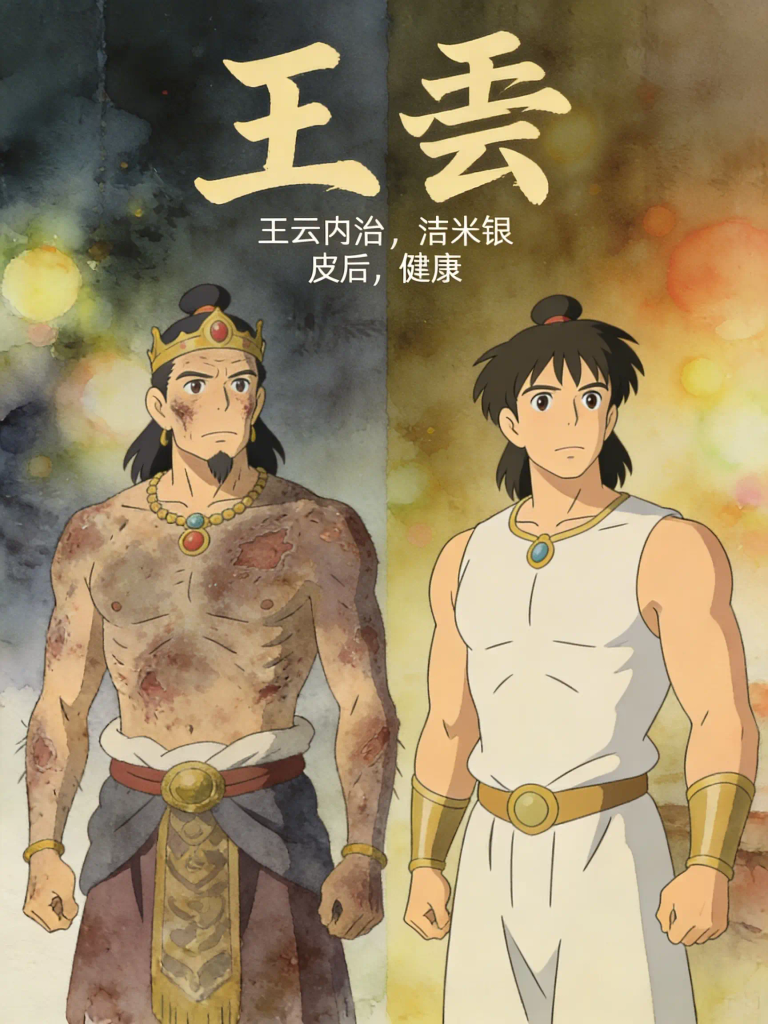
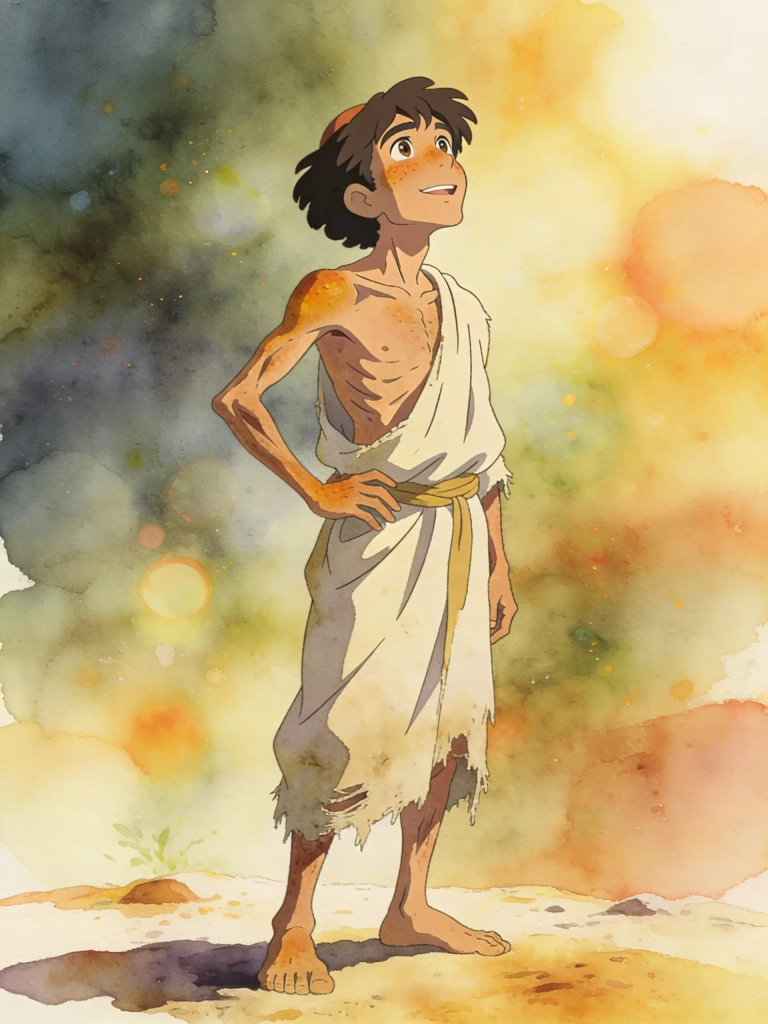
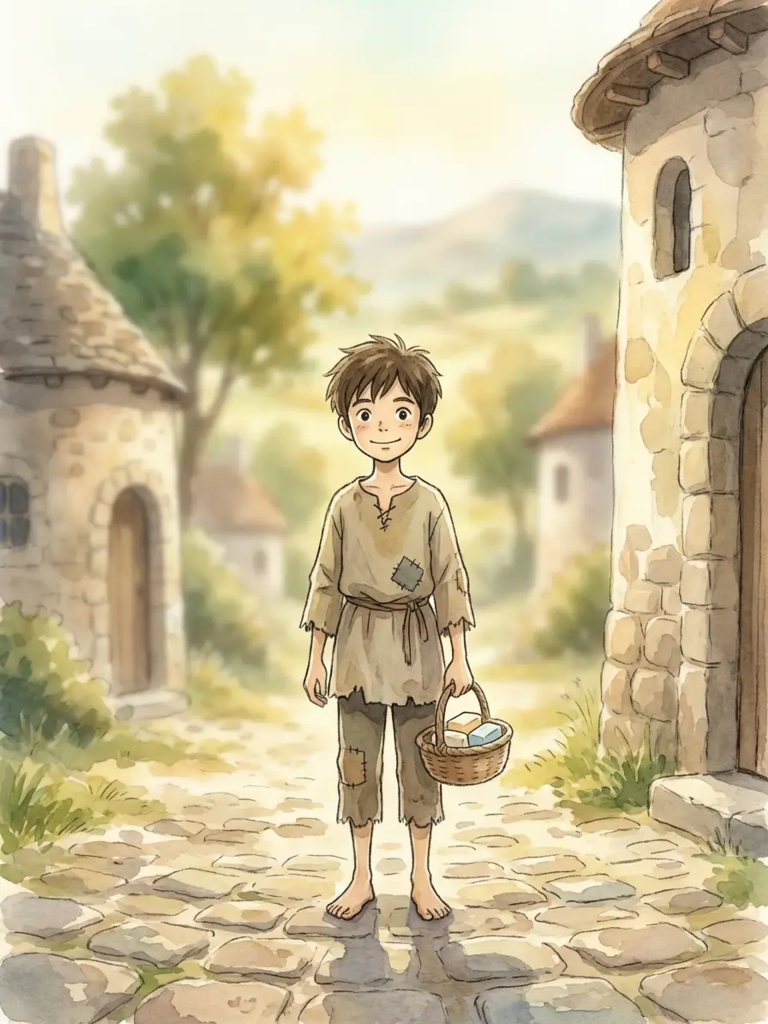
A small, slender boy, initially ten years old, with a bright and open face. His build is typical of a child from a poor family, likely lean from occasional hunger.
Attire: Simple, worn, and practical clothing suitable for a poor boy in Meshed, Persia. Likely a tunic and loose trousers made of coarse, undyed cotton or linen, possibly patched. No specific colors mentioned, but would be earth tones.
Wants: To help his father, to survive, to protect others, and eventually, to serve the King and marry the Princess.
Flaw: His initial naivete (trusting the Ghool), and his tendency to sometimes forget the dervish's instructions until dire circumstances force him to remember.
Transforms from a poor, struggling child into a brave hero, a trusted advisor, and eventually the King's Prime Minister and son-in-law, demonstrating that virtue and courage can overcome humble beginnings.
Brave, resourceful, compassionate, resilient, loyal, observant.

Abdullah ◆ supporting
A poor, thin man, likely with a weathered appearance from years of tramping the city streets and enduring hardship. His build is slender, reflecting his poverty.
Attire: Worn, simple garments of a poor soap seller in Meshed, Persia. Likely a coarse cotton tunic and trousers, possibly a simple head covering, all in muted, earthy tones and showing signs of heavy use and repair.
Wants: To provide for his son Ahmed, to survive.
Flaw: Prone to despair and easily discouraged by his poverty and lack of success.
Starts in deep poverty and despair, but through his son's bravery and good fortune, he is eventually reunited with Ahmed and journeys to the capital, presumably living a better life as part of the King's retinue.
Worthy, loving, despairing, resilient (through his son's encouragement), devout.

The Princess ◆ supporting
Described as 'beautiful' by Ahmed, implying a graceful and elegant figure. Her exact height and build are not specified but would be consistent with a royal lady of Persia.
Attire: Initially, she is closely veiled, but her presence in a palanquin suggests rich attire beneath. Later, she is seen carrying a necklace. Her clothing would be luxurious Persian court attire: flowing silk robes in rich colors (e.g., emerald green, sapphire blue, ruby red), possibly embroidered with gold thread, and fine jewelry. When traveling, she might wear a more practical but still elegant outer garment.
Wants: Initially, to inspect silver work; later, to return to her father and eventually to marry Ahmed.
Flaw: Vulnerable to danger (the lion, the desert), but her quick thinking and resourcefulness (using the necklace) save her.
Starts as a protected royal figure, is saved by Ahmed, and later saves him in return. She falls in love with Ahmed and marries him, becoming his wife and partner in his new royal role.
Gracious, appreciative, playful (scampering off track), loving (towards Ahmed).

The King ◆ supporting
A great King, implying a dignified and imposing presence. He is seen seated on a beautiful Arabian horse, suggesting a strong and capable build.
Attire: Rich, royal Persian attire. Flowing robes of fine silk or brocade, possibly in deep blues or purples, embroidered with gold or silver. A jeweled turban or crown, and a sash with a ceremonial dagger. His clothing would be a clear indicator of his immense wealth and power.
Wants: To rule his kingdom, to protect his family, to maintain peace and order, to reward loyalty and bravery.
Flaw: Overconfidence in his existing security, initially dismissing Ahmed's warnings.
Initially dismissive of Ahmed's warnings, he learns to trust Ahmed's foresight and bravery, eventually making him his Prime Minister and son-in-law, demonstrating a wise ruler's ability to recognize talent.
Powerful, trusting (initially of his guards), appreciative, fair-minded, wise (eventually recognizing Ahmed's value).

Ali, the Dervish ◆ supporting
A poor, frail dervish, weakened by fever. He has a lean build, typical of an ascetic life, and a weathered appearance from his travels in the desert.
Attire: Simple, worn garments. He has a leopard skin thrown over his shoulders, indicating his ascetic and wandering lifestyle. His clothing would be practical and minimal, in muted desert tones.
Wants: To reach Meshed, to survive his illness, and to pass on his knowledge and the crystal cup to a worthy successor.
Flaw: His physical frailty and illness, which ultimately lead to his death.
Appears at the end of his life, serving as a mystical guide for Ahmed by bestowing upon him the magical crystal cup, thus setting Ahmed on his path to greatness.
Wise, spiritual, grateful, prophetic (regarding the crystal cup).

The Ghool (Old Man of the Desert) ⚔ antagonist
Appears as an old man, but has thin legs like those of a sheep, revealing his true monstrous nature. His human disguise is likely convincing but hides a predatory, gaunt form.
Attire: Simple, unassuming clothes of an old desert traveler, likely a loose robe in muted colors, to blend in and appear harmless. This contrasts sharply with his true monstrous form.
Wants: To lure travelers, especially children, and suck their blood for sustenance.
Flaw: Rendered powerless by the sight of metal.
Appears as a threat, is revealed, and then flees, serving as a catalyst for Ahmed's reunion with the Princess and his journey to the capital.
Deceptive, predatory, wicked, cowardly (when faced with metal).

The King of the Assassins (Old Man of the Mountains) ⚔ antagonist
A powerful and feared leader. His physical presence would be commanding, perhaps lean and sharp, reflecting his dangerous nature and authority.
Attire: Dark, imposing garments, possibly of fine wool or leather, suitable for a mountain leader. His attire would be practical yet convey authority, perhaps with subtle weaponry or symbols of his power. No specific colors mentioned, but dark, earthy tones would be appropriate.
Wants: To maintain his power and territory, to eliminate threats to his rule, especially the King of Persia.
Flaw: His reliance on his assassins, who are ultimately thwarted by Ahmed's foresight.
Serves as the primary external threat to the King, and thus to Ahmed's new position. His repeated attempts to assassinate the King highlight Ahmed's value and solidify his rise to power.
Ruthless, vengeful, powerful, absolute in his authority.
Locations

Meshed City Street with Stream
A bustling street in Meshed, the Holy City of Persia, lined with large plane-trees along the banks of a central stream. Women are filling water jugs and washing clothes, camels drink, donkeys roll in the water, and dyers wring out colorful garments. Shops display Meshed silver work.
Mood: Lively, chaotic, dangerous
Ahmed saves the princess from a rampaging lion, demonstrating his bravery.

The Salt River Bank in the Desert
A desolate, dark stretch of desert near the Salt River, which is in flood. The sky is overcast, and a fierce wind buffets the travelers. Later, the moon emerges, revealing a dervish lying on the sand.
Mood: Desolate, dangerous, mysterious, foreboding
Ahmed encounters the dying dervish, who bestows upon him the magical crystal cup.

The Persian Royal Palace
A silent, grand palace in the capital city of Persia, where the King sleeps. It has guards, and dark shadows creep through its halls.
Mood: Silent, tense, regal, dangerous
Ahmed uses the crystal cup to foresee and prevent an assassination attempt on the King, proving his worth.
Story DNA
Moral
Even the humblest among us can achieve greatness through courage, kindness, and divine favor.
Plot Summary
Ahmed, the son of a poor soap seller, bravely saves a princess from a lion, earning her gratitude. Later, while traveling with his father, he receives a magical crystal cup from a dying dervish, which shows future dangers. Ahmed uses this cup to repeatedly foil assassination attempts on the King by the fearsome Old Man of the Mountains, even after being saved from a Ghool by the same princess. For his courage and loyalty, the King grants Ahmed his wish to marry the princess, and Ahmed becomes the King's Prime Minister, bringing prosperity to his family.
Themes
Emotional Arc
suffering to triumph
Writing Style
Narrative Elements
Cultural Context
The mention of Meshed, dervishes, Ghools, and the 'King of the Assassins' (likely referencing Hassan-i Sabbah and the Nizari Isma'ilis) grounds the story in a historical and cultural context of medieval Persia, though the tale itself is fantastical.
Plot Beats (14)
- Abdullah, a poor soap seller, and his son Ahmed live in poverty in Meshed, with Ahmed often comforting his despairing father.
- Ahmed, on his way to school, witnesses a royal procession and a lion breaking loose, attacking the princess.
- Ahmed bravely uses a red-hot iron to drive off the lion, saving the princess, who rewards him with gold.
- After the gold is spent, Ahmed and Abdullah decide to travel to the capital in search of better fortune, enduring a dangerous journey.
- During a severe storm, Ahmed encounters a dying dervish who gives him a magical crystal cup that foretells danger.
- Ahmed and his father are separated in a dust storm; Ahmed is found by a Ghool disguised as his uncle, who tries to attack him.
- The princess, returning from a pilgrimage, coincidentally finds and saves Ahmed from the Ghool, recognizing him.
- Ahmed and his father are reunited and join the King's retinue, traveling to the capital.
- The Old Man of the Mountains, angered by the King, sends assassins to kill him.
- Ahmed, using the crystal cup, foresees the first assassination attempt and warns the King, who dismisses it.
- Ahmed secretly keeps watch and apprehends the assassin, saving the King's life.
- Ahmed continues to use the crystal cup to foil subsequent assassination attempts, proving his loyalty and the cup's power.
- The King, grateful for his life being saved multiple times, offers Ahmed any reward.
- Ahmed requests the hand of the princess, who loves him, and they are married, with Ahmed becoming Prime Minister.